

It began, as many enduring traditions do, with a simple act of friendship.
In the spring of 2001, Antonio Irastorza, a lawyer practising in the City of London, decided to organise what he imagined would be little more than a restorative escape to the Spanish Pyrenees. One of his closest friends, a senior executive at an investment bank, had suffered a serious episode of stress that threatened his emotional and mental well-being.
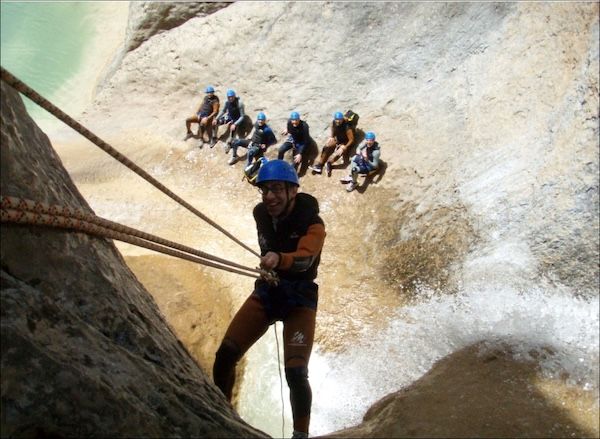
"I thought a few days in the mountains might help him recover his balance," Irastorza recalls. "The programme would combine hiking, canyoning and mountaineering, but I also wanted to include a visit to Torreciudad. My instinct was that adventure, physical challenge and Marian devotion could together provide exactly the environment he needed."
The idea proved far more significant than he could ever have imagined.
Only three friends took part in that first expedition. Alongside Antonio and his banker friend was Alastair, a fellow solicitor and longstanding companion. None of them suspected that this modest excursion would become the foundation of an annual tradition that, a quarter of a century later, continues to attract participants from across Europe, North America, Asia and the Middle East.
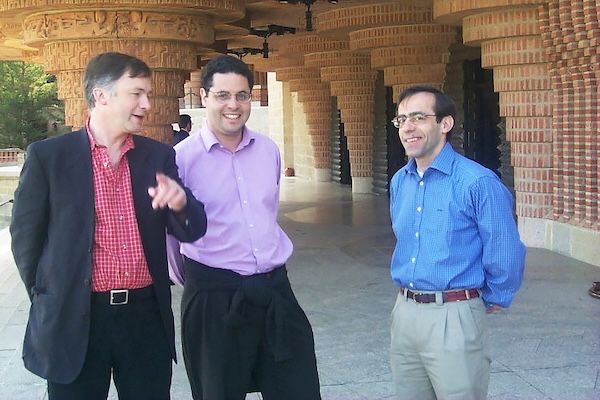
Life in the City
Irastorza understood his friend's circumstances only too well.
Having worked in the City since 1987, he had witnessed at close quarters both the extraordinary opportunities and the relentless demands of international finance and commercial law.
"Those working in investment banking and corporate law frequently operate under enormous pressure," he explains. "International mergers and acquisitions often require decisions to be taken within hours rather than days. The financial rewards can be exceptional and the prestige considerable, but there is a danger that work gradually becomes an end in itself. Family life, friendships and even one's spiritual life can quietly be pushed aside."
The issue was not merely theoretical.
Irastorza had already seen colleagues whose health had deteriorated under sustained professional pressure. In one particularly tragic case, a fellow professional took his own life. "That experience remained with me," he says. "It reinforced my conviction that success alone is never enough. People also need friendship, silence, perspective and time away from the constant demands of professional life."
Those principles would become the foundation of what would later be known as the Lions of the Pyrenees.
From Three Friends to an International Brotherhood
The success of the inaugural expedition encouraged the organisers to return the following year.
Three participants became seven.
Seven became fifteen.
Over the following two decades the group continued to grow steadily until reaching its current limit of forty participants—thirty-five expedition members accompanied by five professional mountain guides.
In total, 174 men have participated during the first twenty-five years of the expedition. Many have returned repeatedly, while every year new members join the group, bringing fresh nationalities, professions and experiences.
Today the Lions include participants from the United Kingdom, Spain, Austria, France, Italy, Portugal, Poland, Moldova, Nigeria, the Philippines, Singapore, Canada, the United States and the United Arab Emirates, among others.
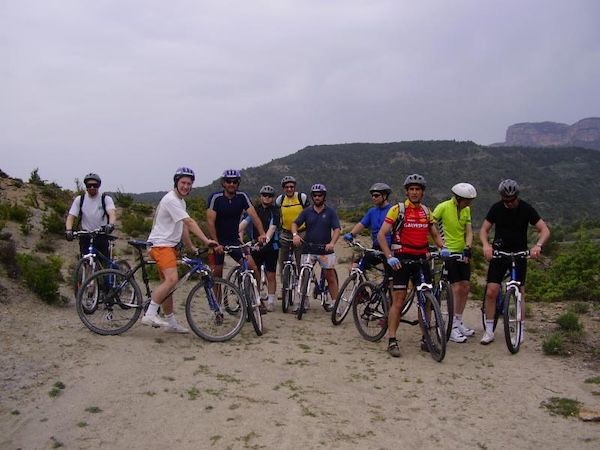
Despite these different backgrounds, professions and cultures, the atmosphere remains remarkably informal. Titles are left behind. The mountains provide a rare environment in which bankers, entrepreneurs, lawyers, executives and professionals meet simply as companions sharing the same paths, the same meals and the same challenges.
Why "The Lions"?
The expedition's distinctive name has two separate origins.
The first is deeply personal.
"I was born in Bilbao," says Irastorza with a smile. "As any Bilbao native will tell you, Athletic Club's players are affectionately known as the Lions of San Mamés."
The second reflects his professional life in Britain.
"In the United Kingdom the term 'Lions' has long been associated with national sporting teams touring abroad, particularly in rugby. It seemed an appropriate symbol of friendship, courage and travelling together."
The name has endured, becoming an identity shared by every participant who has completed the expedition.
Much More Than an Adventure
Although mountain sports remain an essential part of the programme, Irastorza insists they have never been the principal objective.
"The real purpose has always been friendship," he says.
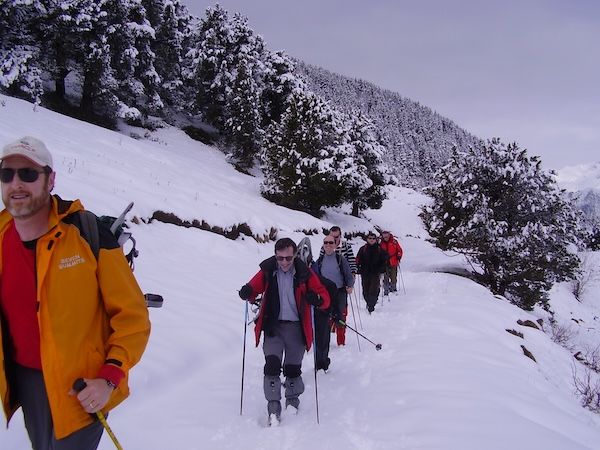
Each May, participants set aside five days to leave behind boardrooms, conference calls and business travel in favour of mountain paths, rivers and open skies.
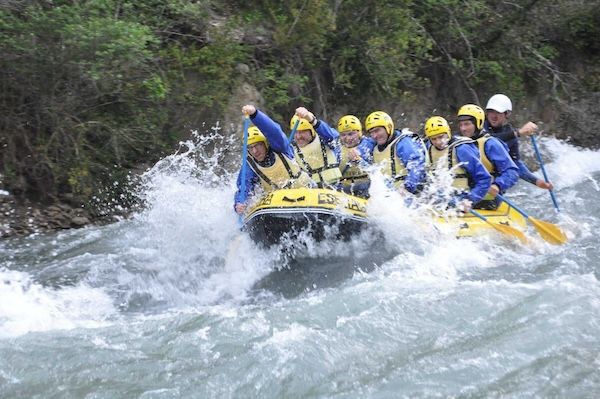
The physical demands of canyoning and hiking are balanced by long conversations over dinner, moments of silence in nature and opportunities for personal reflection.
"When people ask what the expedition is really about, my answer is always the same," says Irastorza. "It is about friendship. Everything else flows from that."
For many participants, those friendships have lasted decades.
Every November the group gathers once again in London, not for another sporting challenge but simply to renew old friendships, welcome new members and begin planning the following year's expedition.
What started as a gesture of support for a friend has evolved into something considerably larger: an international community bound together by trust, shared experience and a common desire to step, if only briefly, outside the pressures of modern professional life.
(In Part II, the story moves beyond the mountains to explore the unique role played by Torreciudad, the expedition's spiritual dimension, its multicultural character, the annual visit to IESE Business School, and the growing connection between the Lions and the region of Somontano. The narrative also explains why participants from many different faiths continue to return year after year).