

Denmark was a deeply Catholic country for roughly 500 years, from its formal Christianisation in the mid-10th century until the Protestant Reformation in 1536. During the High Middle Ages, it was the centre of religious life in the Nordic region.
Denmark is part of the North West Europe region. Do you feel you’re on the map?
Well, there are a few reasons to easily be forgotten. We are so small. The Catholic population here does not exceed two percent and we don't have a center of the Work. But we are changing that, we have grown 200% here in Denmark in two years, from to 2 to now 6 supernumeraries.
How did you end up going from Brazil to Denmark?
When I look back at how we arrived in Denmark, I can only smile. My wife Gabi and I had never imagined living here. To us, coming from Brazil, Denmark was simply a small country north of Germany where we have relatives. But a job opportunity came, and we said yes. Looking back, it is clear how God was present in this decision and has His plans.

What struck you most when you arrived?
From the very beginning, Denmark surprised us. The simplicity of life, and the people. The Danish have a very particular sense of humor which matched with ours—dry, ironic, sometimes a bit dark—and generally speaking, respectful and impersonal. It helped us feel at home quickly. There is also a quiet order in daily life that gives space for what really matters.
So Danish people are easy to get to know?
Like in all Nordic countries, it takes time. But people are open overall. Of course, you don't talk about family when you first meet someone. At first, it takes time. You meet someone, and things remain quite simple. But if you stay, if you are consistent in the ordinary encounters, something grows. Friendships develop naturally. And when they do, they are sincere. You move from small talk to meaningful conversations, going to deeper things in life.
What kind of conversations?
About real things—family, work, relationships, ethics. And also about faith. People are not afraid to engage with deeper questions once trust is there.
How do you build friendships?
As a commercial and harbour country, they are very much used to people who come and go. It is easy to understand their perspective on expats: “Why would you give attention to someone and you don't even know if this person is staying for more than just a few years?” Friendship grows naturally. We meet people at the gym, or for a coffee or specially a beer, by making bread or mead (a Viking drink also known as honey wine), having our annual meetings for gokart or kayaking, or simply by sharing daily routines. Even something as simple as bringing home a pastry for our wives has become part of a ritual with a friend. These everyday moments become opportunities to build friendships and share life.

How do you experience faith in Danish society?
It is interesting. The Danish have a deep understanding of faith. There is a strong sense that “someone will take care of you”. When you fall into hard times, if you are in need, they have a faith that the state will come and help you. That sort of faith makes it easier to grasp the meaning of Providence. People understand the idea that they are not alone. Speaking of life in terms of Providence introduces a new perspective. “Was it coincidence or Providence?”
Others easily say: I don’t like the subject, and then we change.
I have met a few people who have converted or returned to the Catholic faith. Their journeys are often very sincere—searching for truth, and they were not afraid to face it. Once recognized as such, they were willing to follow.
What do you appreciate about daily life in Denmark?
The clarity of priorities. People work with focus, but when the workday ends, it really ends. Family comes first. There is a real effort to be present—at work when working, and at home when at home.
Is there anything you notice about family life?
I know a lot of families, who are not Catholic or not religious at all, and they have three or four kids. But you also see smaller families with 2 kids. The parents feel and are responsible for their kids until they are 18, when the parents expect them to leave home. They are aware of this moment to go their way, again, with financial support from the state if they are students. As for us, we pray to God making sure we say what we want. We trust his plans are better than ours and love it the same way. As many other things in our lives, we can only understand in hindsight.
Are there local traditions you enjoy?
Yes, many small ones. For example, they celebrate twelve and a half years of marriage—that was new for us! Or the custom of greeting everyone when you arrive or leave a party. And celebrations like the eve of Saint John (Sankt Hans Aften) got a new meaning here if compared to Brazil. Singing Christmas carols, or following the strict Christmas recipes have also become enjoyable.

What do you see happening in the near future?
We have already organised our first ever retreat in Denmark two years ago, close to Copenhagen, using the chapel and guesthouses of a Benedictine monastery. Fr Richard Hayward, who is originally British and came over from Stockholm, gave the meditations. He has been coming to Denmark for decades now. We are working towards developing some more activities in Danish, and a few translations.
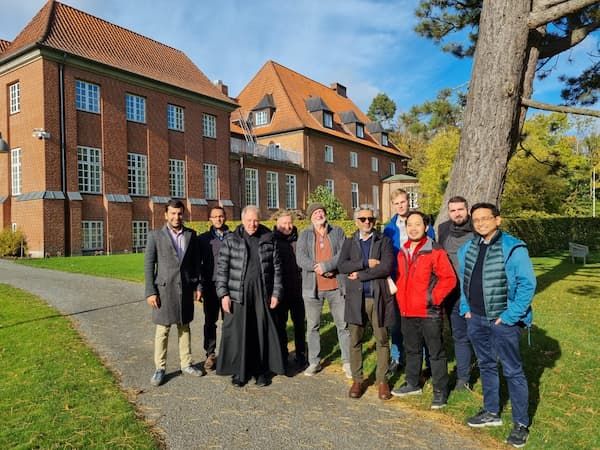
We rely a lot on help from our older brothers in Sweden, Ireland and the UK. So yes, we are small, we are not that many, and we have hope. Over the last years we have attended formation courses in Sweden and in different places in the UK. We have come to a family summer camp in Sweden, and last April a group of ten travelled to Ireland for a silent retreat.
It is true, the region helps us a lot, and we can really pray for each other and keep growing.