
I've always been Catholic, and I grew up in a family that always practiced its faith. Maybe that's why I never stopped to ask myself why I believed. It was like being a fish that doesn't notice the water it swims in: sometimes we're so surrounded by something that we stop seeing it, even when it's a real treasure.
When I moved to Taiwan to live on my own, everything changed. For the first time, no one was taking me to Mass or asking if I had prayed. I started questioning everything: "Why do I go to church? Why do I believe?" Those questions, which could have helped me deepen my faith, left me confused instead. On top of that, getting to Sunday Mass took more than an hour each way. Little by little I drifted away, and I could feel my faith weakening.
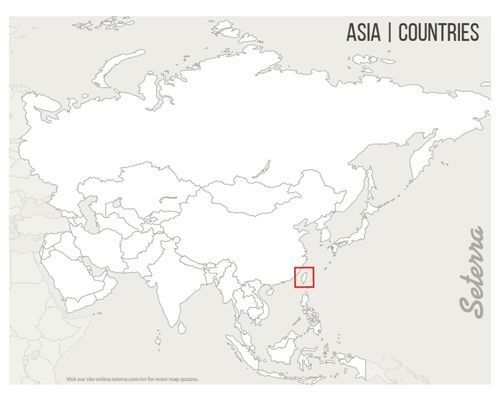
Meanwhile, God was preparing another story on the other side of the world. Gabriel, my then-boyfriend, had started going to Opus Dei activities in Brasília (Brazil). One day, during spiritual direction, he mentioned to the priest what I was going through, and it turned out this priest knew another priest of the Work who lived right there in Taiwan. My contact got passed along from person to person until it reached a numerary from Spain named Isa.
Meeting Isa
Isa wrote to me. She invited me to visit an Opus Dei center and to volunteer at a newborn orphanage. I had never heard of Opus Dei before, and I said yes without imagining that meeting would change my life.
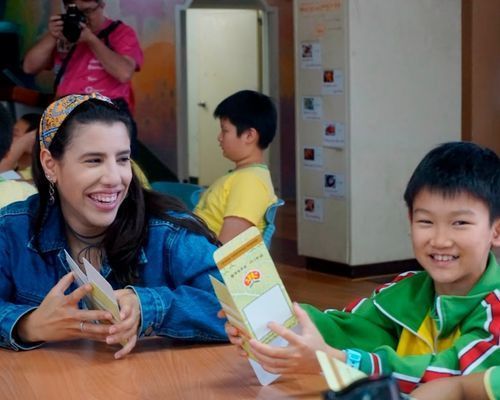
At that point in my life, I had a lot of confused ideas about religion. I had come to think that, in order to live chastity, I couldn't be pretty or draw attention to myself. And then along came Isa: smiling, elegant, wearing makeup, chatting with everyone on the bus. She was a cheerful person, about as normal as they come, and at the same time completely given over to God. When she told me she was a numerary and lived apostolic celibacy, I was stunned. I had never met anyone like her.
That day we spent hours caring for abandoned babies, and afterward she took me to see the center. What struck me most wasn't the house itself, but the people: each one had her own distinct personality and preferences, but there was something all of them shared.
An Hour of Study, an Hour of Prayer
The center was also a university residence for students from different countries. My lease was about to end, and even though it was hard for me to give up living on my own, I liked that environment so much that I took the leap. It's been one of the best decisions of my life. That's where I really got to know St. Josemaría.
The first line of his that I came across was written on a plaque in the house: "For a modern apostle, an hour of study is an hour of prayer." It made a huge impact on me. Studying had always been hard for me, and reading that made me think that maybe God could be found in the very effort I used to avoid.
The residence's study room was always full, even on weekends. Little by little I started following the others' example: getting better organized, building habits, pushing through even when I didn't feel like it. Back in Brazil, that new way of studying paid off: a project I did at the University of Brasília ended up opening the door to my first steady job in advertising.
But the most important thing I learned wasn't academic. I began to understand that God wasn't waiting for me only at church: He was waiting for me in my books too, in a job well done, and in the small responsibilities of everyday life.
I used to imagine that holiness had to do only with grand gestures or extraordinary experiences, and I gradually discovered it was found in the simplest things: finishing a task with care, doing what needed to be done even when no one was watching. Those small acts of self-denial shaped my character bit by bit. I used to be fairly impatient, and over time I learned to offer up setbacks, to accept that not everything goes the way I'd like, and to trust God more.
No Oddities
Another important discovery was understanding that living your faith doesn't mean pulling away from people. St. Josemaría placed a lot of emphasis on naturalness, and one phrase of his stuck with me: a Christian should live "without anything odd or silly" (The Way, no. 379).
Sometimes we imagine that being Christian means putting up a wall between ourselves and the world, as if we had to go through life distrusting others or judging anyone who thinks differently. In Opus Dei I found just the opposite: every person deserves to be welcomed with respect, friendship, and affection, whatever their situation. If someone comes to me with a hard story, like an addiction, struggle, or mistake, rather than making a judgment, I should see a person who needs love.
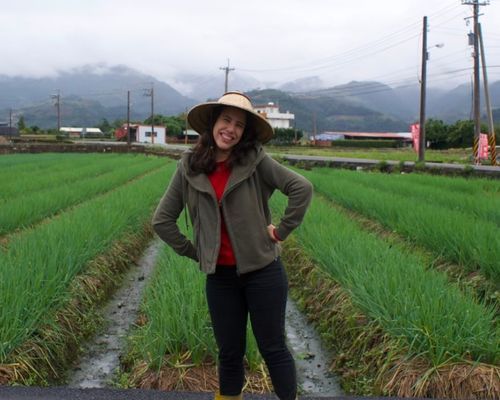
That became very real to me in Taiwan. Friendships came naturally, over a conversation, a meal, a volunteer shift. Before any kind of religious talk, there was genuine interest in people.
Not a "Lesser" Vocation
I went back to Brazil full of enthusiasm and eager to respond to everything God had done in my life. Gabriel and I, who had been together for six years, kept dreaming of getting married and starting a family.
During that stage I would ask myself how I could give my whole life to God. I deeply admired the numeraries' total gift of themselves. But through prayer I came to understand that God was calling me too to holiness, through marriage. It wasn't a "lesser" vocation: it was the path He had planned for me all along.

Not long after, we got engaged. Our wedding was set for May 2020, right when the pandemic shut everything down, and we had to redo all our plans. It was a difficult time.
Where God Wants Me
Today, living out marriage and motherhood, I understand even better what I learned in Taiwan. When our first daughter was born, I realized I wanted to be home more. After several years working at agencies and research institutes, I left my steady job and started handling my own clients. Some people ask me if it doesn't scare me to slow down my career. The truth is, I feel like I'm exactly where God wants me to be.
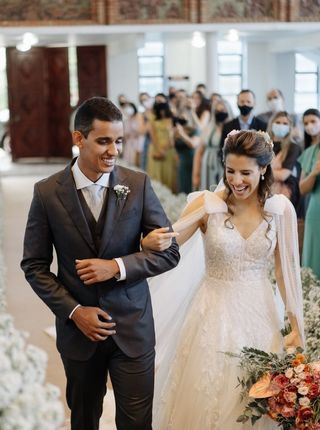
I've discovered there's enormous value in tasks almost no one notices: teaching a child to obey, creating a routine, patiently accompanying her growth.
I often remember a piece of advice I heard years ago: "Do what you ought, and concentrate on what you are doing." If I'm working, I try to really work. If I'm playing with my girls, I want to be fully present with them, even when I'm tempted to pick up my phone while one of them is playing on the carpet. I've learned there's no wasted time when we're right where God is waiting for us.
Faithfulness in Little Things
When I think of St. Josemaría, the first word that comes to mind is faithfulness: the faithfulness of someone who responds generously, day after day, to God's call, even when that means stepping outside their own plans.
I believe that faithfulness is built in small things. It's harder to get up on time every single day than to make one big sacrifice now and then. It's harder to love with constancy than to feel moved for a moment.
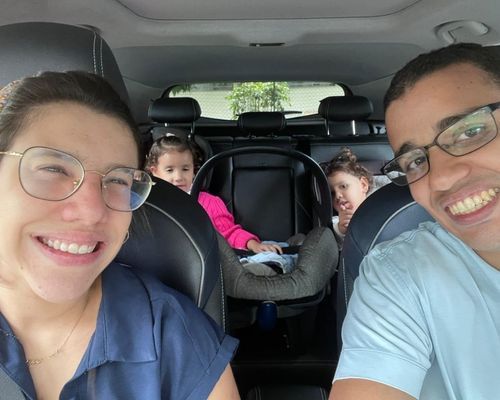
Maybe that's why the spirit of Opus Dei still fascinates me. It has taught me that holiness doesn't happen apart from ordinary life, but within it: in the kitchen, at the office, stuck in traffic, in marriage, in friendship, in raising children.
If someone asked me today what I've found in Opus Dei, I'd answer without hesitation: a path to discovering that God is so much closer than I ever imagined. I haven't had to give up my dreams, my career, or my desire to start a family in order to follow him. Quite the opposite: it's been by living all of that fully that I've learned everyday life can be the most beautiful place to find God.