
To get us started, could you kindly introduce yourself?
Augustine: My name is Augustine Ufoegbune Onyekachi. I am from Isele-Uku in Delta State. I was born on August 28, 1988. Catholics normally remember my birthday easily because it falls on the feast day of Saint Augustine, which is why my parents gave me the name. I am the fifth of six siblings, and my family has been Catholic for three generations.
Anthony: I am Anthony Oluchukwu Momah, and my confirmation name is Alphonsus, though I hardly use it. I was born on October 24, 1991, in Shomolu local government area of Lagos State. I am from Ubulu-Uku in the Aniocha South local government area of Delta State.
Tobe: My name is Tobe Attoh. I was born on September 18, 1995, in Lagos. I am the third of four children. I grew up in Lagos as well, but I am from Asaba in Delta State.
Charles: My name is Charles Ozoene, from Ngwo in Enugu State, Nigeria. I was born on October 8, 1985 into a large family, the seventh of nine children and I grew up in Ibute Ameke Ngwo.
What is one thing about you that people would be surprised to learn?
Augustine: I would say that I am actually a bit reserved. Realizing this pushed me to actively step out of my comfort zone. When I was working as a teacher at Whitesands School, it really forced me to launch out, meet new people, and engage closely with my colleagues and students to build up my confidence.
Anthony: I don't know if it's a massive surprise, but if I look at my hobbies, people might be interested to know how much I've leaned into sports. I run, play football and I have increasingly developed an appetite for trying out different sports.
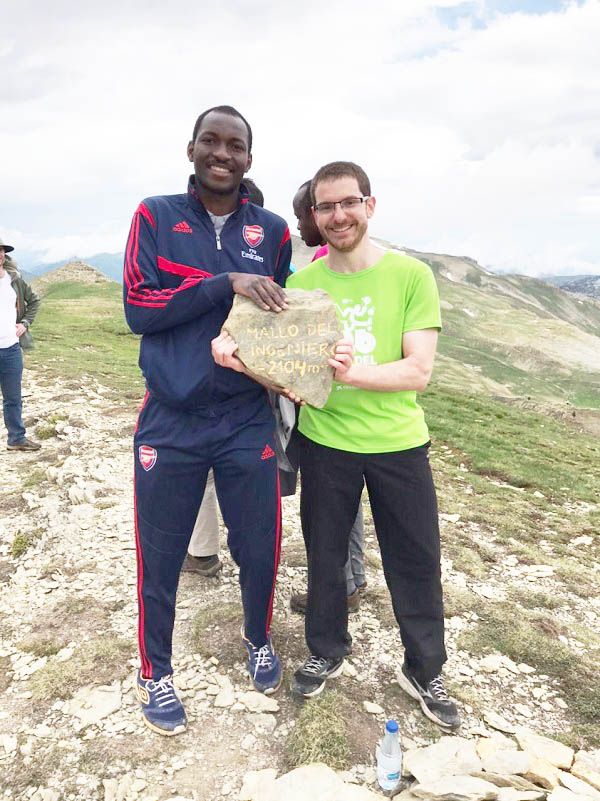
Tobe: I am a massive Batman fan. I’ve been a big fan of Batman since I was about 14 years old. I’m also an Arsenal fan and in the year of my ordination, we won the Premier League Trophy.
Charles: I would say that I’m someone who doesn’t like to rush things. I like to think things through beforehand. My parents sometimes call me "Charlie Menthol" because of my calm nature. My Igbo name is Ejike, which is a reminder not to use human force to do things, but to relax and allow the wind of grace to carry me.
What are your hobbies or talents?
Augustine: I play football and I jog. Since moving to Europe, I’ve also picked up a few new hobbies, specifically hiking and a bit of cycling.
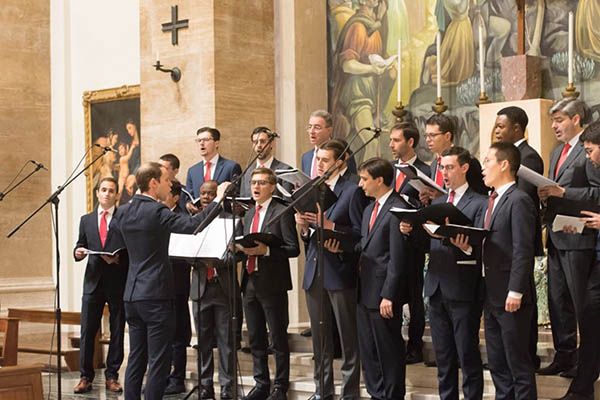
Anthony: Aside from running and football, I’ve tried my hand at tennis and table tennis. When I was living in Spain, I did a bit of cycling as well. Additionally, I love singing. That trait comes directly from my family; I started singing when I was very small. In the 2024 Priestly Ordination, we sang the Igbo offertory song “Ezi Chukwu” that received a lot of traction because the choir was majorly Europeans (we were only two Nigerians in that Choir).
Tobe: I love football. I also enjoy watching movies, and I like to read quite a bit—especially a good book or a captivating novel. I also like to go on long walks when possible. Just a couple of Sundays ago, some friends and I went on a walking pilgrimage to visit the seven major basilicas in Rome, which was a beautiful experience.
Charles: When I moved to Spain, I finally had the courage to explore my interest in music and started learning the organ; I can now read sheet music. I also love playing football because it allows me to rest while fully engaging my brain and body. More recently, I've been playing Tennis, and I also enjoy cycling.
What kind of music, movies, or books do you enjoy?
Augustine: I love the Classics. In terms of books, I deeply enjoy historical works because they help me situate myself within a specific context—Paul Johnson’s History of the World is a favorite. When I moved to Spain, reading Cervantes’ Don Quixote de la Mancha was a true eye-opener for me because the use of parables heavily mirrors traditional African storytelling. I also love Dostoevsky’s The Brothers Karamazov, Alessandro Manzoni’s The Betrothed, and, of course, our very own Chinua Achebe.
Anthony: I lean heavily toward gospel and classical music. I love sacred music and singing in choirs, though generally speaking, I can appreciate any good music. For movies, I enjoy classical films like The Lord of the Rings and The Hobbit. I don't read a vast amount of literature, but I love diving into a well-written story.
Tobe: To be honest, I will watch just about any movie that tells a good story, regardless of the genre—whether it's action or drama. It's the same for books; if it's a nice narrative, I'll read it. Over the past year, I've read several historical books. I read one about the mid-twentieth-century troubles in Northern Ireland after we watched a series about it, which prompted me to read more history books, specifically about Nigeria. And, of course, I am a massive Harry Potter fan. I have read, watched and listened to Harry Potter.
Charles: For movies, I enjoy dramas that genuinely reflect humanity. Any decent, human-centered story appeals to me because true human experiences always carry an element of respect and dignity. Musically, I love listening to traditional Igbo music. My dad used to listen to these tracks, and hearing them places me in contact with his sacrifices and the memories of my village. It is a great anchor for my faith.
What University did you attend and what Profession were you practicing?
Augustine: I attended the University of Benin (UNIBEN), where I studied Educational Management and Economics. Afterward, I became a teacher at Whitesands School, teaching Civic Education, Business Studies, and Economics. I loved teaching because my goal was to help students internalize the values rather than just memorize them. In Civic Education, I made politics engaging by assigning legislative roles to my junior classes (JSS1 as House of Reps, JSS2 as House of Assembly, and JSS3 as Senators) and introducing the Nigerian Constitution. In Business Studies, I emphasized that every career—from medicine to engineering—requires business ethics and a commercial mindset. To make it real, we held a career day where students dressed as their future professions, and they even started drafting practical business plans in JSS1 to show them that education extends far beyond passing exams.
Anthony: I studied Chemistry at UNIBEN. My elder siblings went there as well, so they paved the way for me. After graduating, I didn't actually work as a chemist; my only real lab experience was during an undergraduate internship. Instead, I worked at the Institute for Industrial Technology (IIT) as a program coordinator for about two years. Afterward, I did various part-time roles, including tutoring at Whitesands School, assisting at a NGO Educational Cooperation Society ECS, while serving as the secretary for the Regional Center of Studies.
Tobe: I studied Law at the University of Lagos (UNILAG) and subsequently attended the Nigerian Law School at the Lagos campus. After being called to the bar, I practiced as a lawyer for roughly ten months before heading to Spain to begin my theological studies.
Charles: I also completed my undergraduate studies in University of Benin (UNIBEN), where I studied Medical Laboratory Science, and for several years I worked as a laboratory scientist in Niger Foundation Hospital in Enugu State.
How did you meet Opus Dei?
Augustine: It happened while I was preparing for my post-UME exams. My dad suggested I move closer to the university environment to stay informed and attend preparatory classes. I stayed with a friend, and one Sunday, I visited the university chaplaincy. There, I ran into an old friend named Victor, who had been my altar servers' president when my family lived in Cross River State. He told me about a place nearby where I could go to confession without waiting in a long queue, which turned out to be the Isiuwa Study Centre. I started frequenting their Saturday activities, noticed a computer programming course on their notice board, and enrolled. Through prayer and growth in my interior life, I eventually discerned my vocation. I asked to be admitted into Opus Dei as a numerary member on the 10th of May 2013.
Anthony: I first came across Opus Dei in Lagos after finishing secondary school when I read The Way. A female colleague of my dad was reading it, and I borrowed it from her. However, I didn’t know about the Work's formational activities until I went to university in Benin. I was looking for regular spiritual direction and confession, which I couldn't easily secure with the university chaplains due to their busy schedules. I heard that a priest was readily available at the Isiuwa Study Centre, so I started attending activities there during my second year of university and eventually joined Opus Dei in 2013.
Tobe: I met the Work thanks to my mom. Before my younger sister was born, my mom came home from work one day and made an incredibly delicious dessert for the family. She revealed she had learned the recipe at an Opus Dei center for women, so my brothers and I enthusiastically encouraged her to keep going since good things came out of there! Eventually, my brothers started attending the youth clubs at Helmbridge Study Center, and I followed suit, even receiving my First Holy Communion there. I later attended Whitesands School, and by my second year at UNILAG in 2015, I asked to join the Work as a numerary. The previous year, I had the privilege of being in Spain for Don Alvaro’s Beatification which I think reinforced my convictions.
Charles: My first real encounter was during an evening Mass at the University of Benin. During the announcements, I noticed a fellow student, Kosi, holding a small book titled The Way. I was intrigued and accepted his invitation to learn more. Through this providential "book apostolate," Kosi eventually brought me to a center of Opus Dei, where I found far more than just books. At the center, I discovered a silence unlike any I had known: a silence that listened, questioned, purified, and invited. “There I became convinced that listening is indispensable to the discernment of any vocation. In that silence, I wrestled with the great questions of life — suffering, purpose, work, and the meaning of vocation. I began to sense that God was asking something of me, though I hesitated, waiting for a sign. Yet God continued to ignite the chispa — the spark — through people, books, and circumstances.
My admission to university, my habit of daily Mass, and the unexpected gift of The Way were all part of a divine choreography. As the call became clearer, I found myself asking God, half in fear and half in awe: “Are You sure it is me — and not another Charles?” Eventually, with trembling joy, I wrote the letter to join Opus Dei as a numerary in 2012. I thought that was the end of the story. I was wrong. It was only the beginning.
What was the most striking thing to you about Opus Dei?
Augustine: Coming from a family of hard workers, I always held the belief that one must work well. My dad strictly emphasized that. What struck me about Opus Dei was taking that concept a step further: it wasn't just about working well, but about serving God, your family, and your neighbor through that work. The idea of supernaturalizing daily professional work completely captured my attention.
Anthony: My very first striking impression was the immense solemnity and atmosphere of recollection in the center's oratory. In a way, the ambience and environment reminded me of the Catholic secondary school I attended, and that ambiance truly resonated with me.
Tobe: For me, it is family life—how genuinely close we are to one another. Additionally, the charism itself is beautifully attractive because it reminds everyone that God wants us to be happy right here on earth and then forever in heaven. To achieve that, you don't have to do anything extraordinary; God meets us directly in the middle of our ordinary, everyday lives.
Charles: The profound family atmosphere, the warm reception, and the patience of everyone there stood out immensely. It helped me realize that the Work is truly supernatural.
How hard was it to leave your previous profession to study for the priesthood? What did you have to give up?
Augustine: In the end, no matter what you study, everyone is a teacher—even a Priest. Moving from being a teacher in charge of a class of 35 or 600 boys to caring for the souls of thousands of people felt like a natural continuation. The teaching profession heavily prepared me for this because teachers act in loco parentis (in place of parents). Similarly, a priest acts in the name of God to dispense the sacraments and accompany people through life from marriage and birth until their final moments. It is simply a deeper way of serving others.
Anthony: Given the professional transition I had already made—moving away from IIT to manage a center of studies and care for the people there—the step towards heading to Spain wasn't completely jarring. I had already oriented my mind toward attending to people. Honestly, what I found most difficult happened much earlier, when I had to leave my university choir to accommodate formational activities. Coming from a musical family, that was a real sacrifice, but I knew I had to prioritize my formation.
Tobe: Because God is incredibly generous, you can never truly outdo Him. What you give up is nothing compared to what you receive. I didn't give up much, to be fair – I had a young legal career and a bright future ahead of me. The transition was smooth, and any sacrifice is eclipsed by what God has given me in return.
Charles: In the letters I had written to the Father, I had always said I was available for anything. I had never thought that I would be asked to study for the priesthood, it didn’t even cross my mind. When I was asked, it was a real shock. I had to ask someone to help write the letter to the Father – while I dictated – because I couldn’t write.
What were some major cultural shocks you had in Europe?
Augustine: We Nigerians are full of radiant energy; we hail each other loudly and make friends instantly. In northern Spain, where I lived first, the people are a bit more reserved initially. They take their time to build a friendship, but once that bond is formed, they open their doors completely and become friends for life. The other culture shock was the children. In Nigeria, kids are often shy around adults, but in Europe, they are incredibly audacious. They will spot you on the street and boldly test you with math questions like "7 x 5," or demand to know if you support Madrid or Barcelona!
Anthony: For me, it happened during my first weeks in Pamplona, Spain. I arrived in July 2019 right during the festival of San Fermín. I had never left Nigeria before, so seeing millions of Spaniards gathered in the city square dressed in white and red, running from bulls, and watching fireworks was overwhelming. The sheer volume of people—which was about six times the normal population of the city—was a massive shock to my system.
Tobe: The biggest adjustment for me wasn't the language, but the winter cold! That was the absolute biggest challenge. The language is tough, but with time, patience, and practice, it comes to you. The food also took some adapting since there are certain European dishes I'm still not crazy about, but you get used to it.
Charles: The biggest cultural shock hit me the moment I arrived in Spain to study theology at the University of Navarra. I got there and realized I could not even say my own name in Spanish! I had initially wondered how I would ever learn the language. Thankfully, the people at the center and University were incredibly patient. When I finally strung together my first complete sentence in Spanish, I told myself: "Any human being on earth can learn any language."
Let’s be honest, did you ever adapt to the food in Rome?
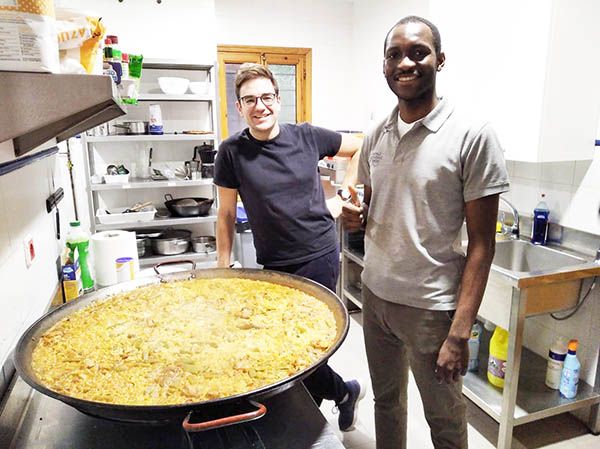
Augustine: Yes, I am deeply enjoying the food here. The pizza, the carbonara, the pasta—it is all wonderful. And don't get me started on the gelato! Even the fruit is amazing; the oranges here are actually bright orange, unlike our green ones back home, and the apples are as big as your fist.
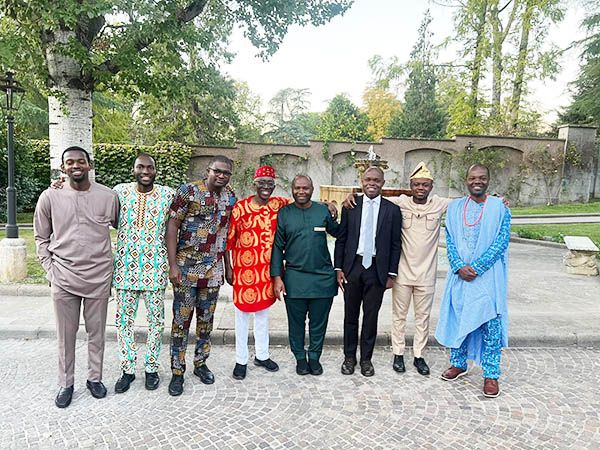
Anthony: Yes, I did. In Pamplona, I only ate Nigerian food once when a friend invited me out to a Nigerian restaurant. But I never actively craved it or felt out of place. Rome is different from Spain; Italian culinary culture revolves around pasta and pizza, and the city has several Nigerian restaurants. Once in a while, the residents here gather for a Nigerian reunion to share a home-cooked meal, which is always nice.
Tobe: Almost entirely, yes. There are still a few things that are difficult for me to enjoy, but for the most part, I've adapted well. When you are served something you aren't completely crazy about, you just view it as a small moment of mortification and eat it gracefully!
Charles: To be completely honest, I eat anything! Growing up as the seventh of nine children taught us that we needed to survive, so we ate whatever was provided. So, adapting to the food in Rome was never an issue for me.
Living so close to the Vatican, the Pope and the Father must feel surreal. Can you share one unforgettable moment from your time there?
Augustine: A moment that completely struck me was last year on May 8, when Pope Leo XIV was elected. Our university is very close to the Vatican, and on that Thursday, I was heading home when someone mentioned seeing white smoke. I ran to St. Peter's Square. While waiting, someone made a beautiful remark: "This is one of the rare times children are waiting for the birth of their father." It was incredibly emotional, and his first speech was delivered straight from the heart. Regarding the Father, you know, when you join Opus Dei, you just hear "the Father, the Father, the Father, the Father," but being here, meeting him so many times, having get-togethers with him, cracking jokes, and telling him things about, my family, my region, and generally my apostolate, has built a beautiful closeness that moves me to pray for him constantly because I know he's carrying a lot of load. And also now, being in the Priestly Society of the Holy Cross, I am here to also help him in this double side of the coin of holiness and apostolate, which is the main goal of Opus Dei.
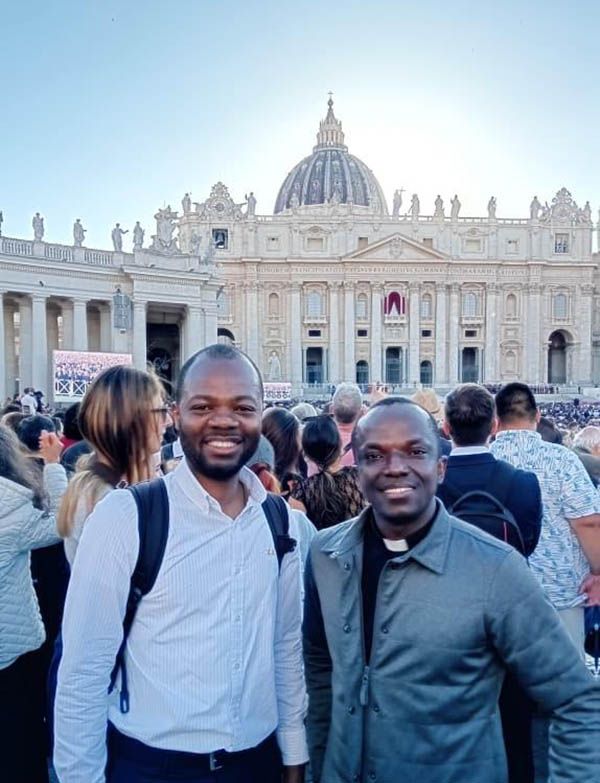
Anthony: One of the first things you do when you arrive is visit St. Peter's to say the Creed, and then go to the Prelatic Church of Our Lady of Peace to pray at the tomb of Saint Josemaría. Also, being part of the massive Papal audiences and attending Mass at St. Peter's Square with people from all over the world is a beautiful experience. My get-togethers with the Father have also been wonderful; he is a man of few words who listens intently, encourages us, and truly embodies the role of a father caring for his family.
Tobe: The election of Pope Leo XIV was unforgettable. Five of us went to St. Peter's Square that Thursday, and it was highly providential because one of our companions was scheduled to leave Rome that very day to take up a caretaking role at a Conference center outside the city. We were praying he would at least see the white smoke before leaving, and he was actually the first one in our group to spot it! It was highly emotional. Coincidentally, an American student in our group had spent the entire year reading the letters of Leo XIII and the works of St. Augustine as a personal project, only for the new Pope to be named Leo XIV and be an Augustinian himself! Furthermore, living in Rome makes seeing the Pope so accessible; you just jump on the subway.
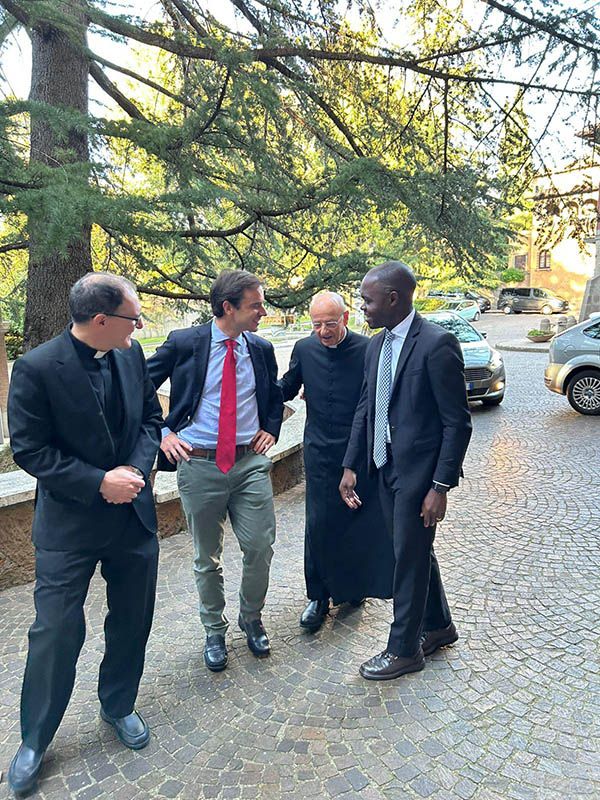
Charles: It is definitely surreal. A moment I will forever etch in my memory is shaking hands with Pope Francis. It was incredible! Closeness to the Father has been uniquely special. He radiates such deep peace and Fatherly warmth. An unforgettable memory happened during my 40th birthday celebration here in Rome. We had a get-together, and as the Father saw us (the two celebrants) he embraced us, he was so relaxed that he literally suspended himself on our shoulders—his legs were completely off the ground! It was a beautiful, human moment.
As you prepare for the Priestly Ordination, what is going through your mind?
Augustine: I am praying a lot for my country, Nigeria, and for peace in the world. I carry a strong weight in my heart for the challenges back home. I recognize that those of us here are sustained by the prayers of so many "prayer warriors"—our parents, relatives, and friends who have supported us. I am asking God to help me be an instrument of unity and deep peace for everyone I encounter.
Anthony: My mind is focused on being entirely disposed to what God, the Church, and the Work expect of me. I am asking everyone for their prayers, and I am praying for the grace to renew this daily disposition. With the feast of Pentecost approaching, I am asking the Holy Spirit to make me a docile instrument in His hands.
Tobe: To be honest, nothing much, though. I’m happy, grateful to God for the gift I'm going to receive, and praying that I'm a good instrument in his hands.
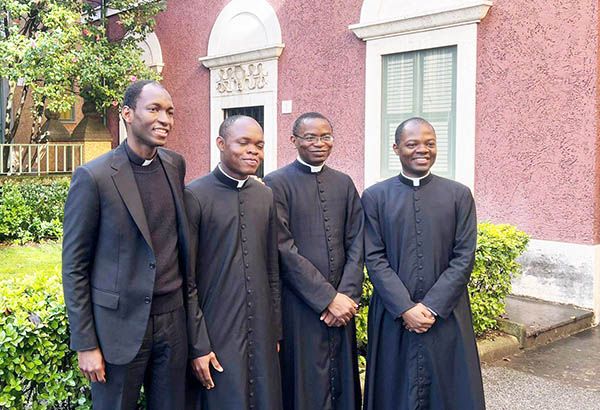
Charles: What occupies my mind the most is the immense duty to look after souls. I am constantly asking God to make me malleable, receptive, and a clean channel for His grace. I absolutely do not want to be an obstacle to anyone's spiritual growth. Sometimes I still ask God, "Am I truly ready?" But I find peace knowing that I am not relying on human force; through His grace, I can be a useful instrument.
What do you hope people feel when they meet you as a priest?
Augustine: I pray that through my actions, people see Christ and not me. I frequently return to the words of Saint John the Baptist: "He must increase, but I must decrease." I want to be among people as Christ was—as one who serves.
Anthony: I hope they see me as a friend, and as a true instrument of Christ and His Church.
Tobe: I want to transmit the love of Christ that I myself have received.
Any Last words?
Augustine: I would say that it is entirely worthwhile. Regardless of the circumstances we face or the challenges that arise—even, one might say, if the sky were falling—nothing is truly lost. Whatever we sow through our prayers, our apostolate, and the love we show to our families and friends creates ripples that resonate across time.
No matter the difficulties, every short prayer and every effort to bring a soul closer to God is worth it. Even if the person seems indifferent. We must keep praying, just as many of us are sustained here by the intercession of others. We should pray for everyone, especially those in need, and for the perseverance of those in marriage, the priesthood, religious life, or celibacy so that we may build what Pope Paul VI called the "civilization of love." Ultimately, God doesn’t lose battles; every good act we perform today echoes in eternity, for everything we do is for His glory.
Anthony: I want to give immense kudos to the work being done in Nigeria. It is a challenging environment, but the dedication of the people gives massive hope to the Church and the Work. We are all supporting each other through the communion of saints, our prayers, and our daily sacrifices.
Tobe: Thanks to everyone who in one way is supporting us and praying for us, we count on your prayers.
Charles: I am overjoyed that my parents will be traveling to Rome for the first time to witness my ordination. I am deeply grateful to Opus Dei for finding me. Opus Dei has done incredible work in my soul, and I pray God continues that transformation. Finally, I want to emphasize that unity has always been fundamental to holiness. Holiness that is not oriented toward union with others is a fake holiness, because the Church is one, holy, catholic, and apostolic.