

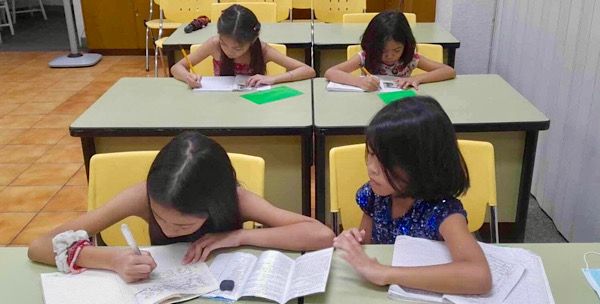
Every first and third Saturday, Crestfield Center in Las Piñas City (south of Metro Manila) comes alive with the voices of young girls, 7-17 years old. They laugh over a cooking project, play sports and engage in various group activities, have talks and classes, exchange ideas, read quietly, and learn their prayers.
This is the Rosas Club today—a community of faith, friendship, and formation. But this garden was first planted many years ago by my mother, Fe de Rosas, a woman of extraordinary generosity and quiet conviction:
A Life Nurtured in Hong Kong
My parents lived in Hong Kong from the early 60s to the mid-90s, where my mother taught in a local school serving children from grassroots families. Day after day, she encountered young people who had enormous potential but meager material resources. She did not simply teach them lessons from a book; she accompanied them through the ordinary struggles of growing up. She became the baptismal godmother of several students and young colleagues who became Catholic.
I saw the fruits of those years of my mother forming young girls in our modest family home. Many of her former students became successful professionals and built beautiful families of their own. Some became prominent in Hong Kong society. My mother did not speak boastfully about them, but pointed out something she deeply believed in: “With good education, genuine guidance, and faith, children from poor families can flourish.”
When my parents returned to the Philippines upon retirement, she did not leave that conviction in Hong Kong. She transplanted it.
The Woman Behind the Club
My mother would have been uncomfortable being called a “founder.” She did not seek titles or recognition. She simply cared for people and served.
She was generous in a practical way—always willing to put in the effort for someone else. When she believed something was important, she pursued it to the end. She wanted the girls, above all, to learn their prayers, grow in faith, and attend Sunday Mass faithfully.
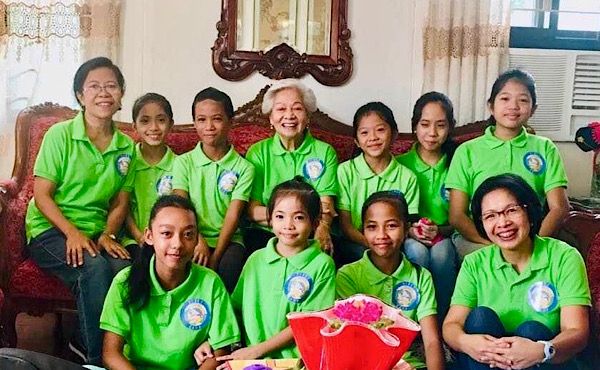
When the club needed funds, she learned to approach people, explain its mission, and ask for help. She was not a natural fundraiser, but her sincerity made people want to participate.
She possessed a quiet moral authority. People listened because she lived what she believed with simplicity and conviction. She was down-to-earth, discreet, and deeply convinced of the power of prayer. As a supernumerary member of Opus Dei, she sought her holiness in ordinary life and generous service.
She held a strong conviction about women’s role in society. She believed a woman’s influence begins in the family—in caring for her home, forming her children, and creating a sanctuary of love. From there, that influence would radiate to society.
She wanted every girl to become a woman of character, a role model in her home, an honest citizen, and a quiet force for good.
From “Super Heroes” to “Rosas Club”
More than 15 years ago, my mother gathered young girls from our neighborhood in Pilar Village—children of friends and neighbors whom she had helped bring back to the Church. She called the first group of girls the “Super Heroes.”
The name was playful, but the intention was serious. She believed heroism could be found in being a loyal friend, a helpful daughter, and a faithful Christian.
The girls learned catechism, prayer, and the practices of piety, and were encouraged to attend Sunday Mass faithfully. They had talks on social graces; reading, sports, cooking, and cultural activities. All these were the foundation of their becoming women of character.
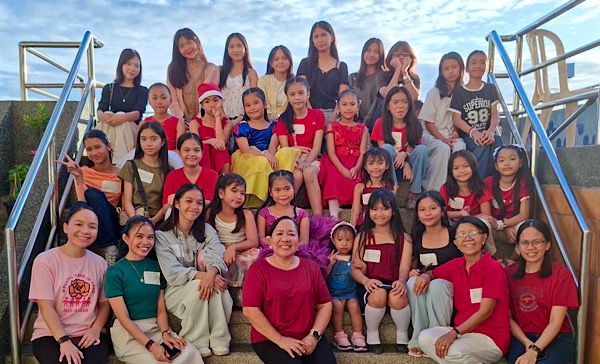
As the girls grew and invited friends, the small gathering in our living room eventually needed more space. In 2017, my mother reached out to Crestfield Center, and with the invaluable help of Nora Barameda, assistant numerary of Opus Dei, the club found a second home there. (Last month, Nora passed away after a lingering illness. She is lovingly remembered as the steady captain of the Rosas Club through these years.)
A Graceful Farewell
When my mother died in 2020 after a short but serious illness, we felt her absence deeply. Yet as people shared their memories, I kept hearing the same words: warm, sincere, confident, and easy to be with.
She had a remarkable ability to connect across generations. She could speak as naturally with a nine-year-old girl as with someone her own age. That gift touched many lives.
One girl told me: “Auntie Fe made you feel like you were her favorite, even though she made everyone feel that way. She made us feel important.”
A mother told me that Fe’s moral authority was reassuring: “You knew that if your daughter was with Fe de Rosas, she was safe.”
And a longtime friend from Hong Kong said simply: “With Fe, you never felt like a project. You felt like family.”
Those words tell me what my mother accomplished better than any list of activities ever could.
After her death, the girls asked how the club could continue. They held a contest for a new name and chose The Rosas Club—from our family name “de Rosas”, but also a beautiful reminder of something my mother loved: roses and flowers.
Each girl was like a flower slowly opening under her care. Now, every time they gather, my mother’s memory is there with them.
A Legacy That Lives On
Today, the Rosas Club continues to meet at Crestfield, sustained by friends who generously give their time and energy.
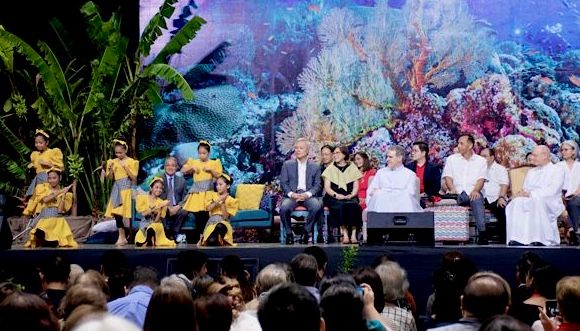
We remember milestones such as the 2019 Bible Camp at Woodrose School and the girls’ joyful performance of Itik-Itik for Fr. Fernando Ocariz, the Prelate of Opus Dei, during his visit to the Philippines in 2023.
People sometimes ask me how I plan to continue her legacy. The truth is, I am simply doing what I can to sustain the Rosas Club, without overthinking it, just as my mother would have wanted.
Both my mother's longtime companions and my own continue to rally behind this work, with incredible generosity. As they say in different ways, “if it came from Fe, it must be something good.”
I do not think of her legacy simply as growing the club from, say, 15 girls to 40. I think of the ripple effect she believed in. Forming a young girl in faith and character means influencing the future mother, family, and community she will one day build.
The Rosas Club is my mother’s quiet garden of roses. It began in a modest home in Hong Kong with a woman who believed in prayer, education, and the potential of every child. Today, the garden continues to grow.
Opus Dei is an institution of the Catholic Church that helps people in all sectors of society find God in their work and daily life, while serving the needs of the Church and the common good.