

Reverend Father Julio Diéguez, regional vicar of Opus Dei in the Philippines and Indonesia, dear brother priests, dear sisters and brothers in Christ, sons and daughters of St. Josemaria Escriva:
On the feast of Saint Josemaria Escriva, allow me to take you down my memory lane.
I did not have a personal experience with Saint Josemaria himself, but I believe that the collected experiences I have with many of those who followed his way will amount to a picture of the man and the saint.
My first encounter with Opus Dei - and for that matter with Saint Josemaria - was with Fr. John Portavella. I was then first year in college seminary in Cebu. And Father John was allowed in the college seminary to give circles to the seminarians. I would like to stress the word “allowed”, because not all seminaries during that time were hospitable to priests of Opus Dei.
It was my first experience of spiritual direction and although the body was heavy, the spirit was at least willing to go the extra mile of listening to Fr. John at one [o’clock] in the afternoon while everybody else was taking their siesta.
It was a slow burn. Priests of Opus Dei are not the firebrands that we know some social media personalities are today. But what kept me going was the sense that it was what my heart was searching for. The spirituality of St. Josemaria is an acquired taste. It does not catch on right away, but it does leave an aftertaste - one that spoils you for all the other kinds of spirituality, because it has the flavor of truth.
Father John introduced us to other Opus Dei priests. There was the tall guy, Father Luis Lisa of happy memory. On one seminar in Batangas we went on an excursion to volcano island on Taal lake. The sun was already setting but we ran on just to get a glimpse of the crater. When we got back to the study center it was already dark, so I apologized to Fr. Luis for persisting on seeing the crater in spite of the time constraint.
I expected a stern warning, but instead I got a pat on the back. “Persistence is a virtue,” he said, “you’ve got to run to reach your goal.” That changed the way I looked at Opus Dei. Unlike some seminary discipline, Opus Dei does not curtail your freedom. It pushes you on to attain the reason why you are free.
Then there was Fr. Joseph de Torre, the philosopher. One session with him, discussing the history of philosophy from Socrates to Hegel, gave me a passion for philosophy that I was never able to get over. That session gave me the mental outline that connected all philosophical thought into one elegant stream of consciousness.
That same outline became even more sensible under Father Jose Sanguinetti, whose guidance and corrections on my dissertation, years later in Rome, allowed me to finish my course in time. It was not just the way he corrected my draft - and he did so with much expertise, so that one stroke of a pen immediately made clear to me what I’m going to pursue… what line to let go. But it was not just this expertise that helped me. It was also his work ethic.
You submit a draft and you do not have to wait for a month for it to be returned to you. Professors in Rome are infamous for that delay. And that is one reason why students studying in Rome stay longer than their scholarships allow - becoming relics themselves, or worse, ruins of broken dreams and aspirations. Father Sanguinetti returns the draft exactly a week later - all pages read, corrected, and with comments on how to proceed with the research.
I believe that was not just Fr. Sanguinetti. The sons and daughters of Saint Josemaria take their work seriously - no excuses, no delays, just pure love for the work that sanctifies.
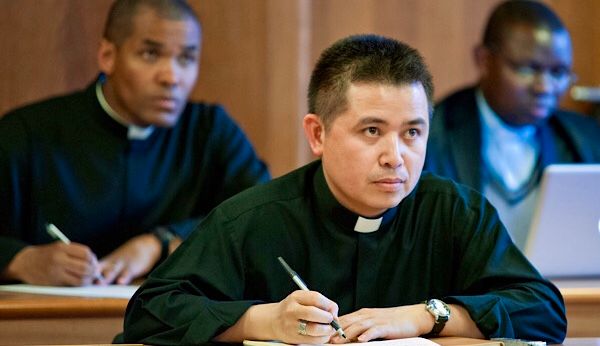
What made it even more inspiring was that the professors we had at the University of Sancta Croce in Rome were not just academics. In the morning they teach philosophy, theology, canon law... In the afternoon, they give spiritual direction.
That was the way I knew Fr. Luis Navarro, an esteemed friend, an esteemed professor of canon law in the University, but a companion and a friend who gives circles to us Filipino students in Rome; and who goes with us on excursions and pilgrimages to the holy places.
I could go on and on and there are still many names that shaped my heart and my spirit. But I think I have made my point. Saint Josemaria lives on in his sons and daughters. The Lord has truly made him a fisher of men. And these men and women, in turn, have caught many other little fishes like you and me.
Very few of us here tonight ever saw the man in person. Yet we have all come together to celebrate his spirit. In Saint Josemaria’s spirituality the spirit of Christ becomes tangible in our everyday lives.
In the plan of life, we are given a series of guideposts to steady our souls as we struggle through the days’ challenges. Through the Preces we are reminded of the few essentials we need to do - and to be - before the God who holds our little lives in his Provident hand.
Opus Dei is not detached from everyday life. It is everyday life made simple and meaningful. Some say it makes you detached from other people’s concerns because you focus only on your own sanctification. But can our striving to be closer to the Lord draw us away from the burdens of others? Does not the same love for God urge us to carry each other‘s burdens?
One last memory may be emblematic of how Opus Dei draws our attention to those in need. Early on in my years in the seminary, I was privileged to meet Blessed Alvaro del Portillo, the Prelate then who succeeded Saint Josemaria. When he visited Cebu, he spoke to us seminarians gathered in Sugbu Study Center. He spoke of how he saw the many poor people around the city. In a conversation later with his companions, he expressed the need to do something to uplift the economic condition of the people.
Several months later, after his visit, the Center for Industrial and Technological Enterprise (CITE) was conceived. Up to this day the center equips young men to harness their God-given talents for productive endeavors, lifting many families out of poverty.
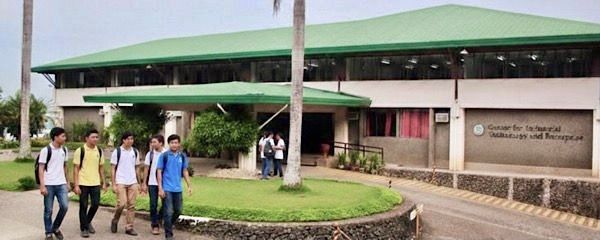
But then again CITE does not just train in industry and technology. It forms persons to strive for personal sanctification.
Today we celebrate the memory of St. Josemaria. Every day we strive to live out his charism, no longer turning away from Christ as sinners often do, but drawing closer to him, to become his instrument of calling all persons back to Himself.