

It is the first papal visit to France in eighteen years, since Benedict XVI's visit in 2008. It also comes at a striking moment for the Church in France: at Easter 2025, more than 10,000 adults were baptized (45% more than the previous year) along with more than 7,400 teenagers; the highest figure in twenty years. Just a few weeks before this visit, a group of friends decided to prepare together, watching the sunset on the beach at Saint-Malo.
It started with an appetizer
It all started with an idea floated one afternoon over an appetizer at the Les Écoles center: why don't we set aside some real time to read Magnifica Humanitas, Pope Leo XIV's first encyclical, together? The idea was to help one another do a real deep dive into the contents, rather than skimming the chapters between meetings and all the other responsibilities of daily life.
We decided to follow St. Josemaría's advice: "Welcome Pope's words with a religious, humble, internal and effective acceptance. And pass them on!" (The Forge, 133). Nine friends set off for Saint-Malo, to an apartment overlooking the sea, for a full weekend dedicated to discovering and exploring the encyclical.
What the Pope helped us (re)discover
The first surprise was how accessible the text is. One of the participants summed it up this way: "It's a very readable encyclical. I never would have thought I could read something like this." Far from being a document reserved for specialists, Magnifica Humanitas speaks in very concrete terms about our life with artificial intelligence and what it transforms in our work, in our thinking, and in our freedom.
Several of us were struck by the Pope's call to know how to disconnect from AI voluntarily. "The idea of 'fasting from AI,' of learning to do without it, so as not to depend on it for everything, really hit me," one of them confessed. Another made a new resolution: "I won't let using AI make me lose my personal spark."
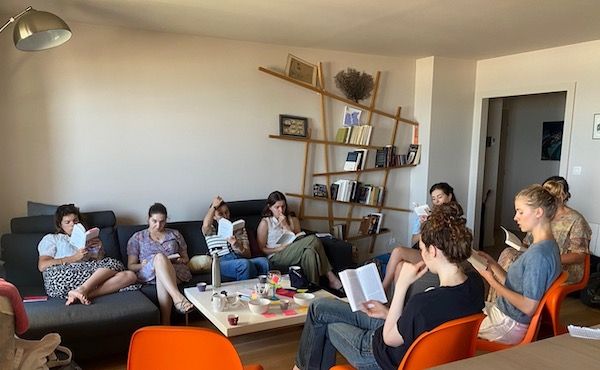
What we hadn't quite anticipated was the effect of praying over what we were reading. At Mass and during moments of silence, the ideas stopped being notes for debate and became something more personal, as we let the encyclical work within us.
"I'm moved by Leo XIV's praise of weakness. In the 'cracks' of the people around me, and in my own, I can contemplate a humanity that does not conform to the paradigm of optimization, but that carries within itself wisdom, creativity, the long arc of learning, mistakes, solidarity, love, and suffering." Without saying it outright, that's what many of us had been looking for: a reminder that our worth is not measured by our output.
A dip in the sea between chapters
The idea was never to shut ourselves away with a book for three days, but to combine serious study with real rest: ten hours of work spread across the weekend, interspersed with swims in the sea, walks along the ramparts or the shoreline, a good Breton crêpe, moments of prayer, and of course, the Holy Mass. Enough to read the encyclical thoroughly without giving up rest or friendship — which was exactly what gave the whole project its meaning.
We prepared it together, dividing up the tasks. Each chapter had the same format: a quiz to break the ice, presentations to share what we had found, and small workshops in which each person prepared a topic to explain to the others.

Fasting from AI
There was nothing exceptional about the means we used that weekend: an apartment rented between several of us, a printed copy of the encyclical for each person, a few notebooks and pens, and above all the desire to make the most of our time. That was one of the lessons we learned: you don't need complicated devices to let a magisterial text reach you. All it takes is getting together, unplugging from routine for two days, and reading together.
What about you? What are you doing to help others get to know the Pope? It could be as simple as praying for him and reading his writings. And if you'd like, join his journey to France with your prayer, from wherever you are.