

She was trembling all over. Laila had never given a cooking class in her life. But someone had told her they needed to fundraise to renovate a center for spiritual retreats, and she had responded with her usual frankness: “You can ask me for anything, except to ask for money.” And yet, there she was, in front of a group of women, wearing an apron and holding a recipe, ready to give a cooking class.
“In the first class, my hands and legs were shaking, but we managed to raise the money we needed.”
But how does an eighteen-year-old Lebanese girl who once left home not knowing where she was going end up here?
The first lottery
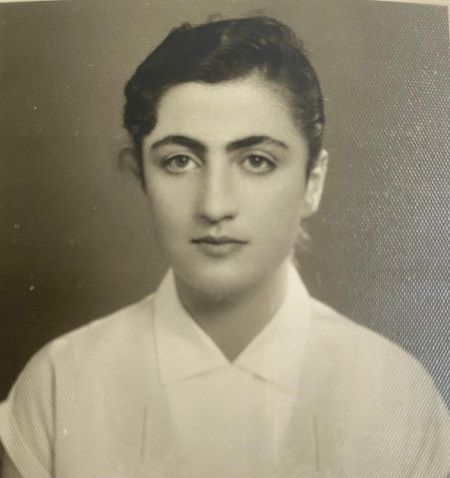
Laila was born and raised in northern Lebanon, in the mountainous region of Batroun, land of Maronite Christians with centuries of history, where faith and family are almost the same thing. Her community was deeply rooted in the traditions of their land.
Miguel Saab was a businessman of Lebanese origin established in Colombia. During one of his trips to his homeland, he visited Laila’s family home and was captivated by her serenity, her character, and the nobility she radiated. They were drawn to each other right away, and a few months later, they were married.
Laila was young. She didn’t speak Spanish. She’d never been to Colombia. But she embarked on the journey.
Her first home was the city of Neiva, capital of Huila, a warm river city in the heart of southern Colombia, on the banks of the Magdalena River, so different from the Lebanese Mediterranean. There her six children were born: Nadia, Rose Marie, José Miguel, Munir Elías, Luis Roberto, and Claudette. Over time, the family moved to Barranquilla (a Caribbean city in northern Colombia) and finally, in 1982, they settled in Bogotá, where Laila would remain until the end of her life.
This was her first gift: a home, a husband, six children, a life built with a promising future. No one knew about the cross that would soon follow.
The first cross: an attack
In Barranquilla, she learned about Opus Dei and discovered her vocation as a supernumerary, before there was even a center in that city. Something about the message of finding God in ordinary things, family life, and work resonated with her.
Then came 1994.
They traveled again to Lebanon to attend a family wedding. The Lebanon of the nineties was still a country catching its breath after fifteen years of civil war; a land where joy and fragility coexisted in uncomfortable proximity. Her husband was attacked during the celebration and left in critical condition. He could not receive adequate medical care in the country, so he was transferred to Colombia with the hope that he would recover. But it was already too late.
Laila cared for him during the three years he remained quadriplegic, never leaving his side for an instant, sustaining him with the fortitude that can only be born from deep faith. Her children remember that she never spoke about those events or about her husband’s death with any resentment. Laila did not deny the suffering: she passed through it.
In moments like that, Saint Josemaría advised a prayer full of trust in God: “‘May the most just and most lovable will of God be done, be fulfilled be praised and eternally exalted above all things. Amen, Amen.’ I assure you that you will find peace” (The Way, no. 691).
The second lottery
After Miguel’s death, Laila took on the responsibility of raising her family. Her children note that she grew up in a time of scarcity in Lebanon, and she had deeply ingrained habits of austerity, ingenuity, and an ability to make use of everything. Even when they were living more comfortably financially, she maintained that habit of gratitude for small things. After squeezing oranges to make juice, for instance, she would prepare delicious sweets with the peels that everyone enjoyed and that most people would have simply thrown away.
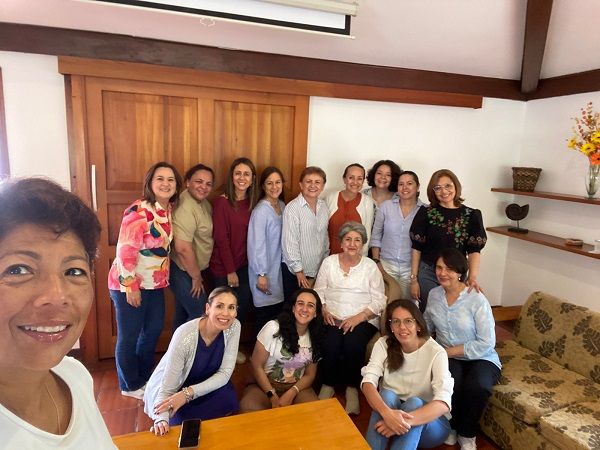
She put that same instinct at the service of the apostolate, and this is where her vocation to Opus Dei began to bear fruit that she herself could never have calculated. The cooking classes (which had started with that one trembling class) ended up helping them pay rent and meet other needs. She bought pashminas, tablecloths, and Lebanese trays to sell in Colombia and dedicated the proceeds to apostolic activities promoted by the Work.
For years, she saved a fund for the beginnings of Opus Dei in Lebanon, collaborated in equipping the oratory of the Al Tilal retreat center, and arranged for a Mas of Saint Josemaría to be celebrated in Beirut for two consecutive years, before there was even a center. And those are just a few of the things we know about.
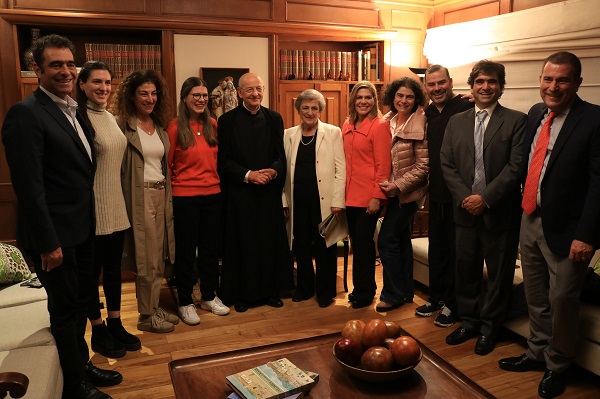
And when she read a critical article about the Work written by a priest, she sought him out to calmly explain the truth. A deep friendship was born from that gesture... as well as the priest’s lifelong devotion to Saint Josemaría.
The second cross
Years later, she fell ill with cancer. She did everything she could to overcome the disease, and at first, the treatments seemed to be working. Later on, however, the disease returned, and once again she underwent therapy with serenity and determination, driven by her desire to continue accompanying her children and maintaining family unity.
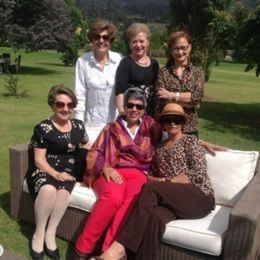
As the cancer advanced, her body weakened, but she tried to receive the sacraments and spiritual formation whenever possible. When she no longer had the strength to go out, an Opus Dei priest assisted her spiritually at home. She received the Anointing of the Sick on several occasions, the last one just two days before her death.
In thanksgiving
Her parish priest was visibly moved when he shared that he had never seen the church as full as it was at her funeral.
Laila summarized her life with her usual flair for expressing important ideas: “My God allowed me to win two lotteries: the first, marrying my husband; the second, meeting the Work.”
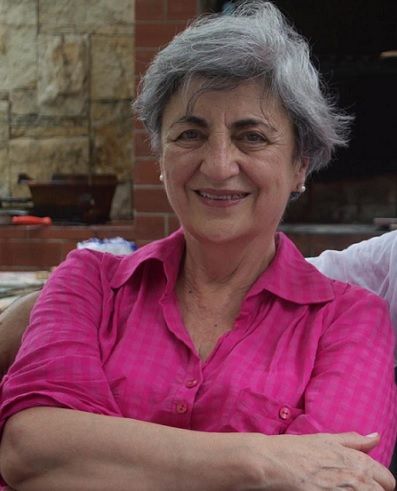
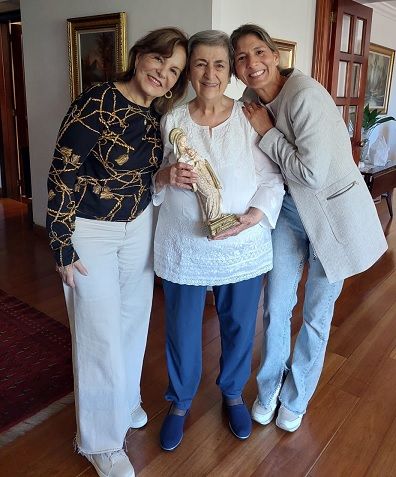
An immigrant who didn’t speak the language when she first arrived, she build a home on the banks of the Magdalena, cared for her husband until his last day, and shared her faith on two continents. Saint Josemaría used to say that, as the years go by, we become more and more grateful: “When thirty years have gone by, you will look back and be amazed. And you will have nothing but to end your life giving thanks, giving thanks...”[1]
Laila reached that end, and that’s exactly what she experienced.
[1] Saint Josemaría, notes from a family gathering, 21-I-1955, quoted in Crónica, VII-55, pg. 28 (AGP, biblioteca, P01). Our translation.