

Montse Grases was born in Barcelona on July 10, 1941. This year marks ten years since the Church named her venerable. Those who knew her — family, friends, neighbors — remember her as warm, simple, with a light all her own. Her death left an enormous void, together with a conviction that holds to this day: her life truly mattered.
An ordinary girl with something different
In 2016, Pope Francis signed the Decree on Heroic Virtues of Montse Grases (1941–1959), a young woman from Barcelona who died with a reputation for holiness after enduring a very difficult illness: bone cancer in one of her legs.
Since then, her story has continued to reach more and more people. The Masses that had been offered for her became Masses of thanksgiving.
A joy that was not vanity
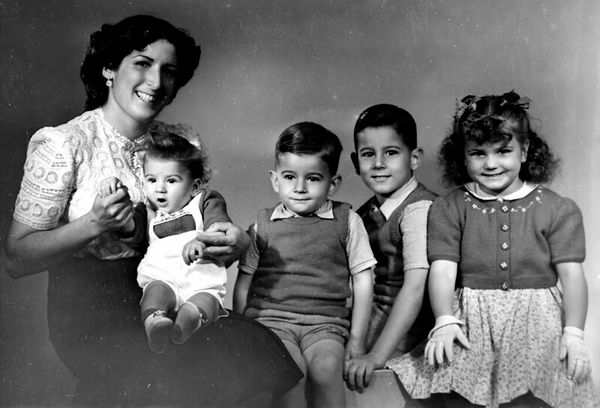
The Decree on Heroic Virtues speaks especially of Montse’s joy. And not only because she endured the final months of her life with good humor — with intense pain and a situation that would be difficult for anyone, let alone someone her age — but because that smile on her face was constant, natural, real. With God’s help, it had become one of her defining characteristics.
Fr. Emilio Navarro, the priest who accompanied her for years and a close friend of the family, describes it with a single word: normalcy. Everyone who knew her had grown so accustomed to that smile that, when she was gone, what stood out was its absence.
The photos and home videos the family has preserved confirm this. Her father was very fond of capturing everyday life with that small camera: at home, in summer in Seva (Barcelona, Spain), walking with friends. In every image, the same expression appears. It wasn’t pasted on for for the camera. That was just her.
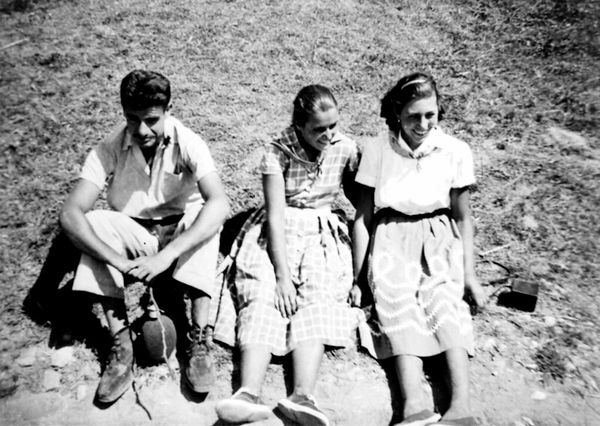
Her joy was contagious. Her friends said they had a wonderful time with her even when they weren’t doing anything special, whether they were just walking, hiking up Montseny, or playing basketball. That boundless energy that kept them constantly moving, amid laughter and jokes, once led them to break a bed at Castelldaura, an Opus Dei retreat house near the sea, in Barcelona, during a spiritual retreat with a group of friends.
That joy and serenity did not come from superficiality or from ignoring problems, but from something much deeper: a maturity in faith, hope, and charity that grew as she grew in her relationship with God. Montse’s smile was rooted in her prayer life, in that habitual conversation with Jesus she kept up throughout the day.
An ordinary life: feet on the ground and heart in God
The Grases were a large, close-knit family, quite representative of the middle-class Catalan families of Barcelona of that era: Christian, fond of the mountains, with a love of music and theater, a circle of friends, and a summer home. They held a “family council,” in which parents and older children would speak and make decisions together about the household rules. Montse had a very good relationship with her parents, especially with her mother, who had taught her from a young age to pray and to find God in the events of each day.
Montse was outgoing, open, and a bit of a joker. She loved cycling, tennis, and the mountains. She had many friends and was always making plans, especially in the summer.
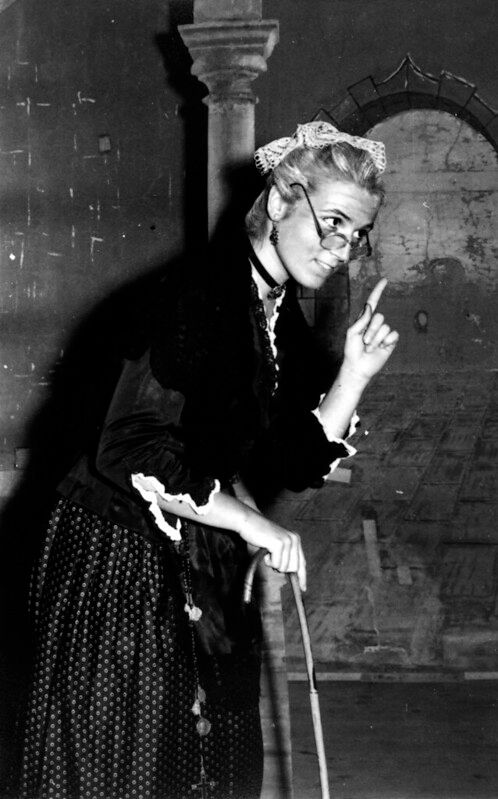
At 13, she occasionally visited Llar, an Opus Dei club where there were activities for young professionals, where she spent her free time with friends and received human and spiritual formation. St. Josemaría’s message about holiness in ordinary life gradually took root in her.
She thought it over for months, spoke with her parents — who encouraged her to take her time — and on December 24, 1957, at the age of 16, she took the step, deciding to apply for admission as a numerary member of Opus Dei. That evening, walking down the street on her way to her parents’ home to help with the Christmas Eve dinner, she felt that Barcelona looked “more beautiful than ever.”
Understandably so: she was brimming with the joy of someone who feels she’s found her place in the world. She was excited about going to Paris to help lay the groundwork for Opus Dei in that country. But illness was an unexpected turn in the path God was setting before her.
When life changes your plans
Montse did not grasp the seriousness of what was happening to her all at once. At first it was just a discomfort in her leg that gradually worsened. She kept living normally, without dwelling on it. Her parents had to navigate the dilemma of when and how to tell her the truth, with all that entails for any family when one of their children is ill.
The night Montse understood that she had only a few months of life left, she said goodnight and went back to her room calmly. Her mother went to check on her, expecting to find her crying. She found her serene, at peace, praying.
Shortly afterward, her parents arranged a trip to Rome for her to pray at St. Peter’s, visit the city, and meet the founder of Opus Dei, for whom Montse — like all members of the Work — prayed every day. Before she left, one of her younger brothers asked her to bring him bottle caps from Roman bars. She smiled at the request.
When St. Josemaría greeted Montse, her joy made a deep impression on him. In private, he asked Encarnación Ortega — then the central secretary — whether Montse truly knew how little time she had left. She did. Montse reassured Encarnita: she understood what lay ahead of her, but God was filling her with joy and peace in those final months.
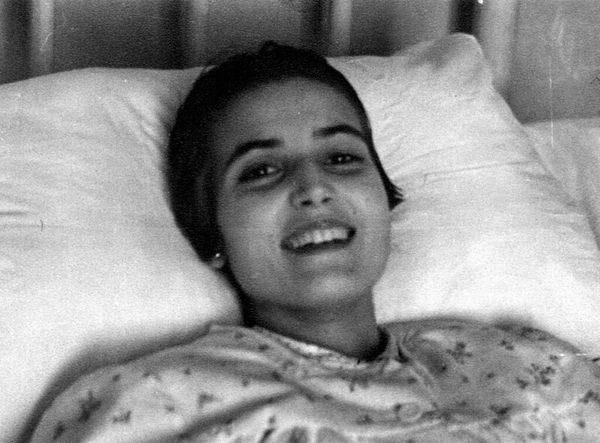
When the plane landed in Barcelona, Montse came back from the trip in high spirits, with so much to share. While everyone was hugging her, her little brother reached into her coat pocket and pulled out a fistful of bottle caps, just as he had asked.
As her brother Enrique recalls, Montse knew how to look pain in the face and not be defeated by it. She kept studying, going out with friends, living a relatively normal life even as her strength steadily diminished. The Christian “plus,” in his words, is that pain can be faced better with God’s help, turning it into a way of loving others: expanding the heart to learn how to love. Montse knew how to be happy in the midst of something very hard, and how to make those around her happy too.
Her friends would visit her at home and leave energized: they had talked about everything, with such joy and naturalness that it was they who had been lifted up. And Montse, delighted to have been able to share something of what she had with them.
The final months also had that flavor of the everyday life of a girl who is fading physically but burning ever more brightly within. Her joy grew more mature, deeper. Her brother said that Montse was becoming a saint at the same time as she was becoming happier.
On March 26, 1959, Holy Thursday, she died in Barcelona. She was 17 years old.
Read the biography “Montse: With the Strength of Youth” here
Close to the next step in the canonization cause
Many people affirmed at the time that Montse must be in heaven. And so her canonization process began, and her life has reached people of all kinds. Many around the world turn to her intercession. Some of the favors received over these years carry enough weight to be studied within the framework of the cause — though none has been officially recognized as a miracle yet — and suggest that the moment when the Holy Spirit grants that gift to the Church may be near.
It is striking that many of these favors come from people who had lost their joy — through illness, through a blow dealt by life, or under the weight of ordinary circumstances that sometimes weigh more heavily than certain kinds of pain.
- “That day my mom and I made up, she went to Confession after years away, and we celebrated her golden wedding anniversary together as a family” (S.M.P., 2016).
- “I asked for her help to put out a fight between siblings that had gone on for a long time” (V.G., 2014).
- “My gratitude to Venerable Montse Grases has stayed alive all these years, and I have handed out many of her prayer cards” (A. B. M., 2023).
All those stories end the same way: “Thank you, Montse!” And many of them say that, after giving thanks, they look for other intentions to entrust to Montse’s intercession.