
When I first encountered the Vatican’s Antiqua et Nova document in January 2025, one line struck me deeply: “Technological innovation must always serve humanity, supporting and respecting human dignity rather than replacing it.” Those words became the heartbeat of my research and the guiding principle of my academic journey.
On February 27, 2025, I presented my paper on AI ethics at the 6th Northern Philippines Business Research Conference at the University of Asia and the Pacific. To my astonishment, it was awarded Best Paper. That recognition was more than an academic milestone—it was a validation that the questions I was asking mattered. Later that year, the same work was published in Fulbright Chronicles under the title “AI Ethics and Governance: Towards the Implementation of the Human-Centered AI (HCAI) Framework.”
For me, this was not just about research. Since 2010, I had been immersed in business ethics and social responsibility. But AI ethics opened a new frontier—one that demanded urgent attention. Artificial intelligence was no longer confined to laboratories; it was shaping lives in medicine, finance, education, and even the way we communicate. Alongside its benefits came profound ethical dilemmas: privacy breaches, discrimination, job displacement, and accountability gaps.
I began speaking about these issues in various venues—at DYWC radio station in Dumaguete (Negros Oriental), Don Bosco School of Theology in Paranaque City (Metro Manila) and with the Technical Working Group of the Campaign for Character Education Tenacity (CaChET) in Tanay (Rizal). Each encounter reminded me that AI ethics is not an abstract academic concern; it is a human concern. Parents worry about their children’s digital exposure. Teachers wrestle with balancing AI’s benefits against its risks. Students face the temptation of “cognitive offloading,” letting machines think for them.
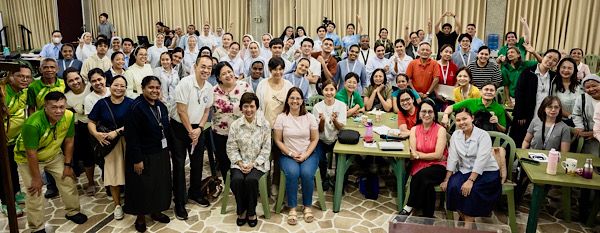
CaChET, in particular, gave me hope. Reaching 1,000 public schools nationwide, its programs instill the Department of Education’s core values of Maka-Diyos, Maka-tao, Makakalikasan, and Makabansa (Pro-God, Pro-People, Pro-Creation, and Pro-Country). Integrating AI ethics into this framework means shaping a generation that can harness technology responsibly, without losing sight of human dignity.
In the Philippines, the ethical challenges posed by artificial intelligence must be understood within the broader framework of business ethics concerns, long recognized by educators and practitioners. Despite the country’s impressive economic growth, widespread poverty continues to shape its social and business environment.
Within this context, it is vital for business ethics scholars and practitioners to advocate for the responsible use of AI in business operations. Algorithms, while powerful tools for good, can generate outcomes with unintended consequences—such as discrimination, job displacement, privacy violations, and other societal impacts. Addressing these risks is not only a matter of technological oversight but also a moral responsibility, ensuring that innovation serves the common good and upholds human dignity.
When Pope Leo released his first encyclical Magnifica Humanitas in May 2026, I felt elated. Here was a clear, authoritative voice affirming what I had been striving to articulate: that humanity must remain at the center of technological progress.
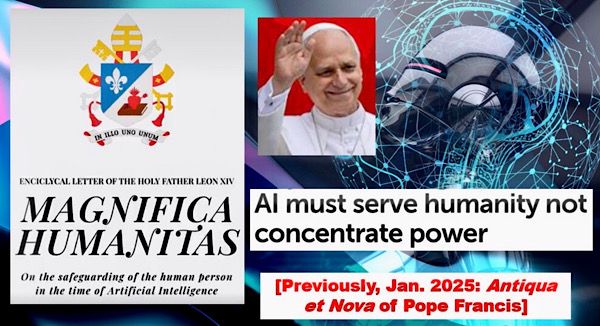
Looking ahead, I will be sharing this message in Catholic parishes, schools, and community gatherings. My hope is simple yet profound—that these conversations ripple outward, influencing not only the academe but also families, workplaces, and society at large.
This journey has taught me that AI ethics is not just about machines; it is about people. It is about ensuring that as technology advances, it uplifts rather than diminishes, empowers rather than exploits, and always, always respects the dignity of the human person.
— The author is a Management and Business Ethics Professor at University of the Philippines, Diliman
Opus Dei is an institution of the Catholic Church that helps people in all sectors of society find God in ordinary work and daily life, while serving the needs of the Church and the common good.