

I have been a judge for 20 years, and I remain in awe of what I do: dispense justice. I see it as a divine task—a work of God. Who can give justice but God, who is Justice Himself? I therefore approach my work with reverence and gratitude. I pray, attend Mass every day, and ask for the wisdom, strength, and inspiration to do my job well. I am grateful for the formation that I receive in Opus Dei, which helps me along this path. And I am still a work in progress, trying to become the best version of myself.
Twenty years ago, I was appointed to the newly created Regional Trial Court in Balangiga, Eastern Samar—the town remembered for the historic Balangiga bells, taken by American forces during the Philippine-American War and returned more than a century later. I had just then returned from London after earning my Master of Laws degree as a Chevening scholar. People wondered why I would leave London for a small-town court. But I wanted to give back.
I applied without a “padrino” (“godfather”). I had my credentials, qualifications, and the recommendations of people who could vouch for my integrity. “Walang gapangan. Walang x-deals.” (“No influence-peddling. No exchange deals.”) I wanted my appointment to stand on merit. When I got the job on my first application, I was “proud” —not because I became a judge, but because I knew I was beholden to no one except the people I served and God.
The court in Balangiga had no courtroom and I was its first staff member. Friends joked that I would “hold sessions under a mango tree.” Eventually, with help from the Supreme Court, local governments, and UNICEF, we built a courtroom that was clean, dignified, and welcoming. I wanted people to feel that they mattered.
I chose my staff on merit, ignoring political recommendations. I trained them and encouraged them to study law. Four entered law school: three became lawyers, and one is now a judge. That remains one of my greatest joys.
I learned that judicial integrity must be uncompromising. People—including politicians, friends, and even fellow judges—have tried to influence decisions. My answer has always been simple: “When it comes to my cases, no one touches me.” They may have heard one side; I hear both. As my mother often reminded me, “a clear conscience is the best pillow.”
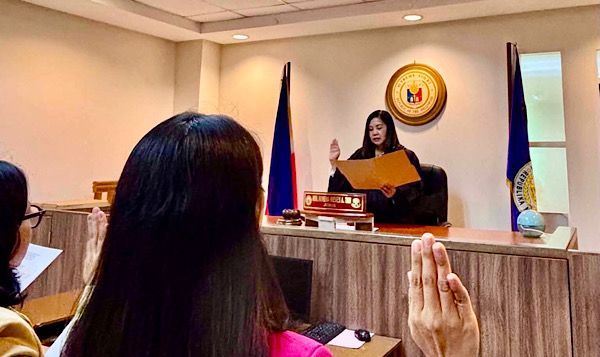
In Eastern Samar, litigants brought me crabs as gifts. One woman was simply grateful that I immediately scheduled her sister’s long-delayed case. Two mothers brought crabs when they came to post bail for their sons. They thought they had to give the judge something. I declined everything. “You don’t owe me anything,” I told them. “It is my job.” I am already paid by the government, with taxpayers’ money.
When I became judge in Pasay City, I discovered that some staff accepted money from litigants as a supposed “bank protocol.” I stopped it. They were unhappy at first. But I told them, “Huwag natin pagkakitaan ang mga kaso natin. Mali yan. Maling-mali.” (“Let’s not earn profit from the cases we handle. That’s wrong. Very wrong.”) Today, they proudly tell litigants, “Hindi po kami tumatanggap.” (“We don’t accept [gifts].”) If that is one thing I leave behind as a legacy, I am satisfied.
But I learned that justice goes beyond the courtroom. I come from a poor province, and I saw how our bad roads kept people trapped in poverty. I organized a petition and signature campaign through churches, stores, markets, internet cafés, and social media. Eventually, through God’s mercy, our province received a major grant for road rehabilitation. Our once-hellish roads became smooth as silk.
I also saw how poverty and ignorance can make people vulnerable to injustice. So my family and friends helped establish a public library in my hometown. Everything was donated—the building, books, computers, and even the salaries of the library aides. Our children are hungry for knowledge. We dream of libraries throughout the country, where every child becomes a reader and every reader, a leader.
Finally, my faith led me to an unexpected ministry. During the celebration of 500 Years of Christianity in 2021, our bishop asked me to do a radio program. I misunderstood and thought I was merely being invited as a guest. Suddenly, I had my own radio show!
“Lima Kagatos Katuig nga Pagtoo”—500 Years of Faith—is now in its fifth year. Every week, I talk about the Commandments, Beatitudes, Sacraments, virtues, the Catechism, and papal teachings in Waray, Tagalog, and English. The episodes are broadcast locally and shared on Facebook.
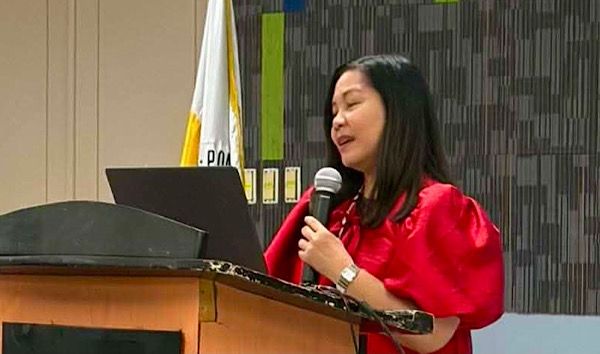
I sometimes wonder if anyone is listening. Then someone approached me in a restaurant and said, “I see you on TV.” A doctor, teacher, priests, nuns, friends, and a retired lawyer have told me that they watch my show. One even said she is learning Waray from the program.
Perhaps that is what being a woman in the Church means for me: to receive what God gives, and then give it away—to serve, to accompany, to speak up, to educate, and to help build a more just and humane society.
I am simply a judge, a woman, a Catholic, and a work in progress. But I have learned that when we place our talents in God’s hands, even an ordinary life can become an instrument of grace.
Opus Dei is an institution of the Catholic Church that helps people in all sectors of society find God in their work and daily life, while serving the needs of the Church and the common good.