It was the second day of rehearsals. The cellist put down his instrument, lowered his bow, and asked him a question that caught him off guard: "Álvaro, I need God. How do I find Him?" Álvaro is a pianist in São Paulo and a numerary of Opus Dei, and that scene is the opening of the final episode of Very Human, the new docuseries about Opus Dei produced by Dígito Identidad, available here.
Álvaro is one of over forty people who share their own encounter with St. Josemaría's message, including Suzana, a Brazilian actress; Gina, a teacher from Chicago; Gianluca, an Italian soccer referee; Aleksandra, a Polish mother; and Juanse, a rockstar from Argentine. In their own words, each of them answers the same question: "Who am I performing for in my life?"
Watch Episode 1: Why Live Like This?
"These life stories are transformative," explains Argentine documentary filmmaker Juan Martín Ezratty, director of Very Human. "Over the years, I've learned about many people who stepped back from the edge of suicide, who gave themselves a second chance, who chose life; married couples that were on the verge of divorce and decided to stay together, and are now doing really well, really happy." He adds, "That's what drives this work: being able to tell these stories and see their transformative effects."
One of the things that struck Ezratty most about the Brazilian pianist was a conversation they had off camera: "I remember he took me to the place where he rehearses, put on a song that's a Brazilian classic — one that says that life is beautiful — and told me, 'If you want to understand my life, you have to understand this: that life is beautiful.'"
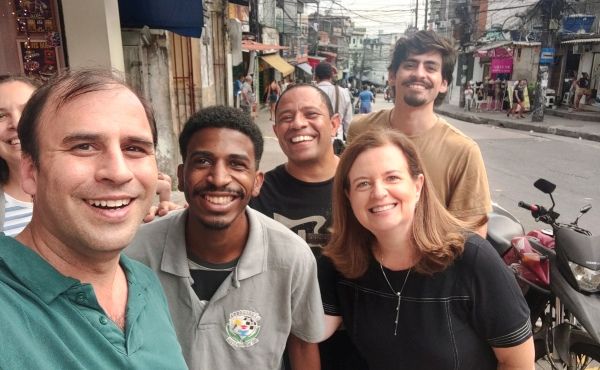
For 25 years, Ezratty has documented the lives of people in more than 30 countries, capturing both their struggles and their moments of renewal, from the life of Pope Francis to social outreach projects across several continents, to the work of priests in extreme locations, family life in the United Kingdom, and the devotion surrounding Pedro Ballester, a young man from Manchester whom the BBC called a possible "first Gen Z saint."
This isn't the first time the Argentine filmmaker has taken on the challenge of showing real lives in Opus Dei on camera. Eighteen years ago, he released the documentary Inspired to Love. Very Human is its sequel, born from his own reflection on how he tells these stories. "In Inspired to Love," he says, "I focused a lot on the what and the why. But over the years, I've come to realize how weak and fragile we really are — trying to imitate the life of Jesus is an enormous task, an impossible one — and that's exactly what I wanted to show, because when you reveal your own fragility, you realize you need God."
As he puts it: "I want to highlight our humanity and the fact that we need God in order to become better, to help others, to imitate the life of Jesus. That's why Very Human keeps coming back to the question of fragility; it shows people in the light and in the shadow, as people who need others."
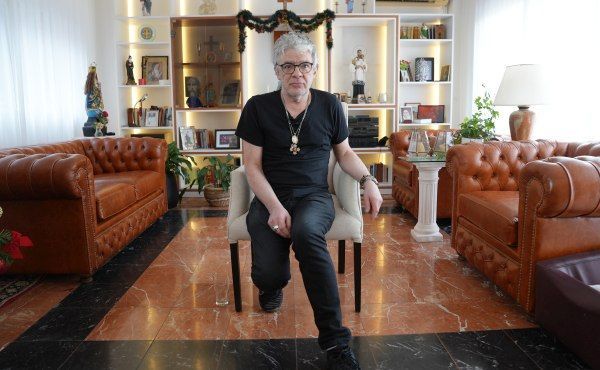
Music ties the whole series together. Alongside Álvaro, Juanse, a famous Argentine rock musician, shares his own path to God. "We talked about drugs," Ezratty recounts. "He told me: 'Look, Juan Martín, I saved myself by turning to God, by turning to our Lady. That's what I leaned on to pull through.'"
Over the course of his conversations with the different subjects, Ezratty discovered a common thread: "What you learn is that you can have a beautiful, happy life, finding meaning in everything that happens to you day to day."
Throughout the series, these testimonies are in dialogue with the teachings of St. Josemaría. The director highlights one story in particular: "He used to tell how someone once gave him a soup tureen that had broken, and that had been mended with iron staples. And he said he thought of himself as that tureen: broken, but restored through God's love, held together by those staples. I hope we can all learn from that story of St. Josemaría's: it doesn't matter how broken you are, it doesn't matter how fragile you feel; if you keep turning to God, you can move forward, you can grow. And that is a characteristic of our humanity. That's where the title comes from: Very Human."
Very Human is available at opusdei.media/very-human and on Instagram.