

Ed Dillett had been working as a plumber for thirty years when he became the third married man to join Opus Dei in the United States. Over the following two decades, he quietly but effectively spread the Work's message of holiness in daily work to many friends, relatives, and fellow workers.
Early Life
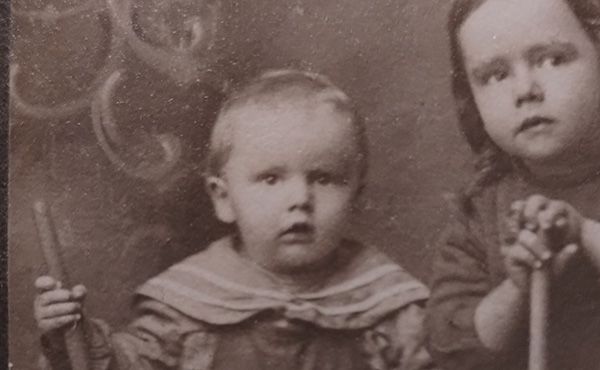
Ed Dillett grew up in a small Wisconsin town some 250 miles northwest of Milwaukee. Shortly after graduating from high school in 1925, he moved to Milwaukee, where he became an apprentice plumber and won the Golden Gloves welterweight boxing championship. At age twenty-four, Ed became a master plumber and started his own plumbing company.
At first, business was slow, and he had to go door-to-door asking people if they needed any plumbing work done. Soon, however, he was making good money and purchased three houses that he intended to rent out. His venture into real estate was ill-timed, however. As the effects of the Great Depression grew worse, his tenants were unable to pay their rent, and the bank foreclosed on his properties. Soon, his plumbing business also failed.
With no work as a plumber and no prospect of finding any, he joined the Civilian Conservation Corps, one of the New Deal's projects to relieve unemployment by hiring single young men to carry out conservation projects on federal land. Ed was sent to northern Wisconsin to cut brush, clear stumps, construct fire lanes, and plant pine trees. His cheerfulness and leadership qualities won him the camp's annual Fellowship Trophy.
Marriage
Shortly before leaving Milwaukee, Ed had fallen in love with Myra Przeworski, the daughter of a coal miner who had been killed in an explosion. Many weekends, to spend time with her, he "rode the rails" on the top of boxcars to and from Milwaukee. He would wait until a train had cleared the rail yard but was still moving slowly enough for him to grab the ladder and climb up to the top of a boxcar, where he tied himself down with a wide leather belt. He could have easily been injured or arrested and thrown in jail, but, fortunately, he had no mishaps.
After one year in the Civilian Conservation Corps, Ed returned to Milwaukee and proposed to Myra. A year and a half later, on May 25, 1936, they were married. They rented the upper floor of a two-story house that had no plumbing except a sink in the kitchen and a shared toilet in the basement. Instead of paying rent, Ed installed bathrooms in their flat and in the ground-floor flat where the owner lived. On November 27, 1937, their first child, Jim, was born.
Shortly after his marriage, Ed once again started his own plumbing company, doing everything himself, from installing pipes to sending out bills. Business improved as the economy recovered toward the end of the 1930s.
By the late 1930s, Ed was attending daily Mass, and he and Myra soon began to say the Rosary every evening. He joined the Holy Name Society and became more involved in the parish. He also tried to bring his friends and coworkers closer to God on a one-on-one basis. One day, for example, while Ed and a plumber he had hired were driving to work in Ed's truck, Ed asked him, "Where do you go to church, Joe?"
"I haven't been to church in quite a while, Ed, why do you ask?"
"Oh, part of it is curiosity and part of it is I'm very interested in trying to help fellas get closer to God."
The next morning, Ed said he had been thinking about their conversation in the truck the previous day. "If I made you uncomfortable, Joe, I didn't mean to."
"No, not really," Joe said, "Your question about where I went to church was a good one. The thing that really made me think is what you said after that: something about your interest in helping me get closer to God. Sometime, Ed, I'd like to talk to you more about that, okay?" As time went by, Joe returned to practicing his faith and he and Ed talked frequently about God.
World War II
At the beginning of World War II, Ed was drafted by the Army to work as a plumbing foreman on the construction of a defense plant in Milwaukee. The job involved seventy-two-hour workweeks and supervising a crew of men, few of whom had any previous plumbing experience. Once the plant was completed, Ed shifted to maintenance of the machines used to produce turbochargers for bomber aircraft.
Ed and Myra both followed the war news closely. But while Ed was elated to hear about effective US bombing raids, Myra was troubled by the killing of innocent civilians. Ed understood her concern but felt an obligation rooted in faith. "I know what the fifth commandment says, honey, but I know it's morally right that we need to help those enslaved by a dictator. Hitler is a dictator who is not just enslaving the German people, he's killed hundreds of thousands of Jewish people. We, as Catholics, can't just sit and let that happen; God wants us to intervene."
The Immediate Postwar Years
At the end of World War II, Myra tried to convince Ed to take a job as a union plumber with a large firm and a steady income, but he was determined to reestablish his own business. He started a new company called Dillett Plumbing. In the economic boom that followed World War II, the business prospered, and Ed hired several other men.
In January 1947, Milwaukee was hit by an enormous blizzard that blocked the doors of the Dilletts' home, but that did not prevent Ed from getting to Mass. He crawled out a second-story window and skied down the side of the twelve-foot snowdrift piled against the house. The church was locked when he arrived, but he knocked at the rectory door and the pastor agreed to celebrate Mass if he would serve. It was the first time he had ever served Mass and he was deeply impressed: "I have never been that close to the altar when the bread and wine become the Body and Blood of Jesus. It was an experience I'll never forget." His son comments, "For Dad, the Mass was something he treasured, and it was the highlight of his day every day."
Ed continued trying to bring others closer to Christ. One day he asked the owner of the gas station where he brought his truck to be repaired, "When's the last time you went to church, Red?"
"Been quite a while, Ed. Not sure God wants me to go to church. Last time I went, someone broke into the station and stole half my tools. I think God was trying to tell me something about taking care of business."
"Well, Red. Let me explain it the best way I can. God has a plan for all of us and goals beyond our business. He wants us to be happy with Him in heaven when we die. And we're all going to die. Let's say you're very successful in business and make a lot of money and leave God out of your life. All the money you make won't matter when you face God on Judgment Day. Do you ever think about it in that way, Red?"
"I guess I don't ever give it a whole lot of thought, Ed. Maybe I should."
"I say you should," Ed responded with a smile. "In the meantime, I'll pray for you, and I hope you will give God's plan a lot of thought and then decide to go to Mass regularly. Okay?"
Ed had accepted the job of retreat chairman for the Holy Name Society at his parish. With prayer and gentle persuasion, he convinced over forty men to attend a parish retreat at a nearby monastery.
As the immediate postwar boom petered out, Ed's business ventures ran into serious problems. He had formed a partnership with his brother-in-law to purchase a mechanical trenching machine to dig sewer trenches and footings for buildings. The new company, D.S. Construction, soon began to face stiff competition from firms with newer and more efficient machines. In 1949, Ed built a new building to house his plumbing business and a hardware store. The hardware store that rented space from him failed within a year, and D.S. Construction was also forced to dissolve. Eventually, Ed had to sell the building as well. He had also purchased a farm, partly out of concern that the United States might find itself at war with Russia. Ed rented the farm to a large family and agreed that they could live there rent-free for a year in exchange for work on the buildings. The family was glad to have free housing but did little work on the property.
The Dillett family and their seven children badly needed a larger house. Although Ed's businesses were not going well, in 1953 he built a four-bedroom ranch. The family moved into the new house in 1954 but had a hard time making ends meet and had to cut back on food and clothing. Nonetheless, they continued making substantial contributions to their parish and several Catholic charities.
About this time, Ed learned that his oldest son, Jim, was being bullied in school. Rather than going to the school to protest, Ed taught Jim to box. The bullying stopped and after a while, the bully came to Ed for boxing lessons.
A Totally New Life
Ed and Myra first heard about Opus Dei in 1955. Many young people learn about Opus Dei through their parents or other relatives who are supernumerary members or cooperators. The Dilletts learned about Opus Dei through their eldest son, who was a senior at Don Bosco High School on the south side of Milwaukee.
In February 1955, two members of the Work visited the school to invite seniors to make a retreat at Woodlawn residence in Chicago, the first center of Opus Dei in the United States. A priest of Opus Dei, Father Ray Madurga, drove Jim and several other boys back to Milwaukee after the retreat and took advantage of the occasion to visit the Dillett family. Ed and Myra were fascinated by what he told them about Opus Dei, and not long after, they both joined the Work. Ed was the first married male member of Opus Dei in Milwaukee, and the third in the United States.
Both Ed and Myra came closer to God after joining Opus Dei. They each found time for daily mental prayer and began reading the New Testament and other spiritual books regularly. They both tried to bring friends and relatives closer to God, not only with their example but with their conversation and gentle persuasion as well. Of course, Ed had tried to do this before he joined Opus Dei, but now he had a clearer sense that he had been called by God from all eternity to do so. In addition, he had a specific message to deliver: that his friends and relatives were also called by God, not just to be upright and nice, but to pursue holiness in and through the activities that made up their everyday lives.
Their son Jim says, "It was as if they were beginning a totally new life."
Externally, very little changed in Ed's life. He continued working as a plumber. He was already attending daily Mass, saying the Rosary, and practicing many of the other customary Catholic devotions that make up the plan of life of a member of Opus Dei. Throughout his life, he had tried to bring friends and colleagues closer to Christ and had instinctively practiced the "apostolate of friendship and confidence" that members of Opus Dei are called to carry out with their friends and colleagues.
Why then does Jim say that joining Opus Dei was the beginning of a totally new life for his parents? Ed did not keep spiritual diaries or write other accounts of his life. From the notes he took during retreats, it seems clear, however, that the new element in his life was a sense of being called not just to be a "good Catholic" and get to heaven-but to be a saint. He understood, as he put it, "We are all called to be saints." He also learned that sanctity requires an interior life, which he saw as a "direct, interior conversation with God and not with self." He became convinced that "the center of the interior life is the Mass and the Blessed Sacrament," and that "personal prayer is a must."
Ed learned that God was calling him to live an interior life of prayer and seek sanctity precisely through his daily life and ordinary work. He discovered in Opus Dei that he could grow in love of God not only by going to Mass and saying the Rosary better, but also by fixing faucets, installing furnaces, and unclogging sewer lines as well as he could for love of God and his customers. He became more aware that his work was a service to others and an integral part of God's plan for him. During one retreat, he wrote: "Christ did ordinary work to show us ordinary work is good. We must imitate Christ in our ordinary work by doing it as perfectly as possible. Let us start by putting Jesus at the head of all our human activities."
Spreading the Message of Opus Dei
Ed hoped his oldest son would become a plumber and join him in the business, but at first Jim was not interested. Instead, he joined the Army Reserve. In April 1958, however, when Jim completed his active duty in the Army Reserve and moved back home, he asked his father if his offer of a plumbing apprenticeship was still open.
Ed was happy to have him. He took advantage of the occasion to confide that he'd been praying for him a great deal. Not so much that he would become a plumber, but that he would come closer to God through his work, whatever that might be:
"Jim, I really think plumbing is a great way to get closer to God; I know it's been that way for me. When I do a plumbing job, I try to do the work as well as possible. I know it's not perfect, but it's as good as I can make it. That's pleasing to God since He created us to work, and He wants us to work out our salvation through our work."
The Dilletts were eager to tell their friends and relatives about Opus Dei. Shortly after Ed and Myra joined the Work, Myra's sister Helen and her brother-in-law Ted also joined. Several other men whom Ed invited to attend evenings of recollection eventually became supernumerary members of Opus Dei. One of them, George Sell, became a particularly close friend. When he died several years later, Ed grieved deeply for him. He remarked, "I'm really gonna miss him, but I'll see him in heaven."
Ed helped set up the first Opus Dei centers in Madison and Milwaukee, Wisconsin. During the summer of 1955, he went to Madison on weekends to help install plumbing in the property which would become Randall House residence. The following year the archbishop of Milwaukee gave Opus Dei a substantial two-story brick house located on the south side of the city, close to Ed's home and many of the other people who had recently joined Opus Dei or attended its activities. Ed and other supernumeraries and their friends worked on the house during evenings and weekends after they finished their jobs. One of them, who was a pattern maker and had a complete woodworking shop, made the altar for the new center. A few years later, activities in Milwaukee had increased to the point that more space was needed. There was plenty of room in the basement, but its ceiling was low. Ed recruited several friends to help him solve the problem by digging out the floor of the basement by hand. He also volunteered to help install plumbing at Petawa residence, the first center of the women's branch of Opus Dei in Milwaukee. Amid all these activities, Ed continued to be deeply involved in his parish, where he taught Catholic catechism classes for students attending public schools.
A Failing Business
Once again, Ed faced serious financial difficulties. In retrospect, it was clear that Myra had been right when she urged him to work as a union plumber with a regular salary, rather than try to run his own business. He was forced to fire all his employees and try to carry on single-handedly. The business was not profitable enough to pay the taxes and mortgage payments on the large home Ed had built, and they were forced to sell it. They built a smaller home in a less-expensive neighborhood. It was far from completed when they had to hand over the keys to their prior home and move into the new, smaller building. For several months the Dilletts camped out in the house amid the noise and dust of construction.
Although Ed tried to remain cheerful and optimistic, struggling with a failing business and working against the clock to finish the new house with little money made him less patient and more easily frustrated. Fortunately, the housing market picked up the following spring, and business began to improve. After attending a workshop with other members of the Work, Ed returned home much more upbeat and hopeful. He had even more energy and more spring in his step.
By 1959, however, Ed had to face the reality that he could not earn a living working for himself. The decision to close the business was especially difficult because his son Jim had recently taken out a loan to buy a new house and he would earn much less working for someone else as an apprentice. Ed took a job working for a large company building a factory. He had to work outside through the exceptionally cold and snowy winter of 1959-1960, but working for someone else did bring with it a steady paycheck and a workday with regular hours. It also brought freedom in the evenings to spend time with family and friends rather than doing paperwork.
In 1966, Ed moved to one of the largest plumbing companies in Milwaukee, which prefabricated a lot of piping assemblies in their shop, bringing them to the job sites for installation. Ed worked in the fabrication shop, running a large threading machine. The job was dull, but Ed did it as well as possible for the love of God. Because he worked alone cutting and threading pieces of pipe, he had a lot of time to pray. He talked to Jesus constantly during the day, asking for many intentions, including the apostolate of Opus Dei. At lunchtime, he would try to direct the conversation away from the dirty jokes his fellow workers liked to tell and sometimes steered it toward spiritual topics. Some of his fellow plumbers accepted his invitations to attend evenings of recollection.
Family Life
Myra had never driven a car, but Ed wanted her to learn so that she could drive herself to the women's center of Opus Dei, which was on the other side of Milwaukee. Most men would probably have thought twice about trying to teach their fifty-year-old wife how to drive, especially with a stick shift. Ed did not hesitate. At the first attempt, Myra found clutch and accelerator coordination too difficult. Ed patiently encouraged her. Myra was so short that she had to use a cushion on the seat to see over the steering wheel, and the pedals were almost out of reach; but with Ed's encouragement, she succeeded in learning to drive.
There was a playful element to the Dilletts' family life. On occasion, Ed would pick Myra up and sit her on top of the refrigerator. She was too short to get down on her own, and he would ask her if she was going to behave herself. Only after she said yes would he gently take her down. One year at Ed's birthday, Myra decorated the cake with candles that relit themselves as soon as they were blown out. Myra laughed hysterically at his efforts until he started taking the candles and turning them upside down into the cake's pink frosting.
Ed did not believe in spanking or hitting the children, but he was a fairly strict disciplinarian, who tried to fit the punishment to the offense. When one of the children talked back to his mother who had asked him to clean the kitchen floor, for example, Ed announced that he would have to scrub the floor on his hands and knees every day for the next week.
Ed's love could be tough when necessary. On one occasion, one of the boys moved out, rented a room over a bar, and began drinking although he was below the legal age. After he had several small traffic accidents, Ed saw him one day in the bar and called the police, who arrested both him and the bartender. He then proceeded to bail the boy out of jail. They were estranged for a time, but eventually they were reconciled and grew so close that they frequently stayed up late into the night talking.
In addition to numerous financial setbacks and the death of an infant son, Ed and Myra suffered other disappointments. One of their children was divorced after five years of marriage; two entered religious life only to decide later that it was not for them; and one of their two children who joined Opus Dei eventually did not continue. Although they were disappointed, they tried to overcome their disappointment and provide their children with the emotional and financial support they needed.
Sickness and Death

In 1969, Ed suffered a mild heart attack, but he continued working at his physically demanding job. In 1972, a more serious heart attack forced him to retire. His heart stopped six or seven times, but each time he was resuscitated. In response to his son's question about what it felt like, he responded, "I was scared, really scared, but I didn't feel a lot of pain. I knew I wasn't ready to meet God, and there was a lot more I needed to do."
When Ed was finally able to leave the house three months after the attack, he exclaimed, "I'm so glad I can finally get to Mass every day; it's such a joy!"
During his prolonged recovery, Ed sometimes talked with his children about heaven: "Heaven is so great it can't be described in human terms. God has prepared a place for us who are faithful that we can't even imagine. Jesus himself said, "Eye has not seen, ear has not heard, nor has it entered into the heart of man what God has prepared for those who love him." I'm so glad God has given me more time to get ready to meet him.
After a while, the doctor told Ed he could do some work as long as he broke it into short periods with frequent breaks. He started some projects in the Opus Dei centers in Milwaukee as well as at his son Mike's home. The project at Mike's home was a fairly large one, but Ed commented, "I hope God gives me time to finish Mike's house, but if he doesn't, it'll be his will. The important thing is I'm going to be ready when he calls, whenever that is." When his eleven-year-old grandson volunteered to help him with some painting, he got more paint on the glass than on the wood. When Ed came to inspect his work, he said, "Wow, Dan; you're doing such a good job and going so fast I think we're going to let you take the rest of the afternoon off." After that, he found other kinds of work for Dan to do.
On September 24, 1975, Ed arrived for work at Mike's house with his toolbox. That day he was going to lay concrete blocks in a foundation trench he'd dug two weeks earlier. He'd work for twenty minutes and rest for ten. At one point, Mike's wife, Linda, heard her dogs barking although it didn't seem to be at anything in particular. She found Ed sitting there with his head bent forward and called him, but he failed to respond. He had died, as he had lived, serving others with his professional work.
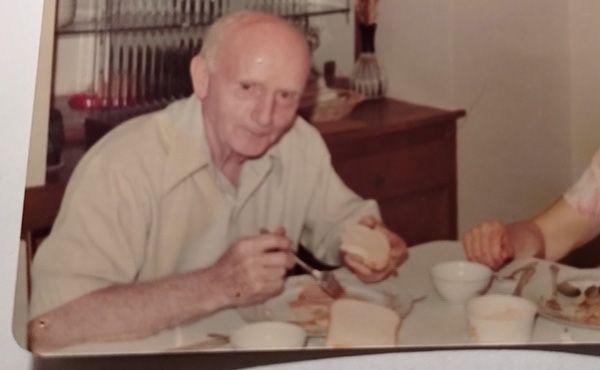
This sketch of Ed Dillett is from John Coverdale's book and podcast "Encounters: Finding God in All Walks of Life." Encounters presents profiles of people living Saint Josemaria's message of finding God in everyday life.
The profiles have been released as an audio podcast series, available on Apple Podcasts, Spotify, or wherever you listen to your podcasts. You can also purchase the entire book from Amazon or Scepter Publishers.