
My name is Liliana Patricia, I was born in Chiclayo, the Peruvian diocese where Pope Leo XIV was bishop between 2014 and 2023, and I am a numerary member of Opus Dei. I consider myself Peruvian by birth, but Cameroonian by adoption and by heart: I came to this African country to dedicate myself to the formation of young people in 2005, and I’m still here 21 years later.
In the year 2000, I moved from Chiclayo to Lima, where I worked as a teacher at Salcantay school. After attending the canonisation of Saint Josemaría in 2002, I spent a few years in university studies in Rome.
Witness to apostolic expansion
During my years in Rome, I was able to see how the Work grew throughout the world, person by person, country by country: in 2003, some women of the Work went to live in Croatia for the first time; in 2004, to Slovenia and Latvia... Every year, companions who had come to study theology travelled to other countries to live there, work, and spread the message of Saint Josemaría. Then my turn came: they invited me to go to Cameroon. I loved the idea, although it made me a little anxious, and I set about learning French.
I left Chiclayo and my country, to share the love of God with other people.
The Work began in Cameroon in 1990, first in Yaoundé and then in Douala and Bamenda. In his recent trip, Leo XIV visited the Anglophone zone, demonstrating that his message of peace can help lay down arms.
Wednesday at the Government Palace
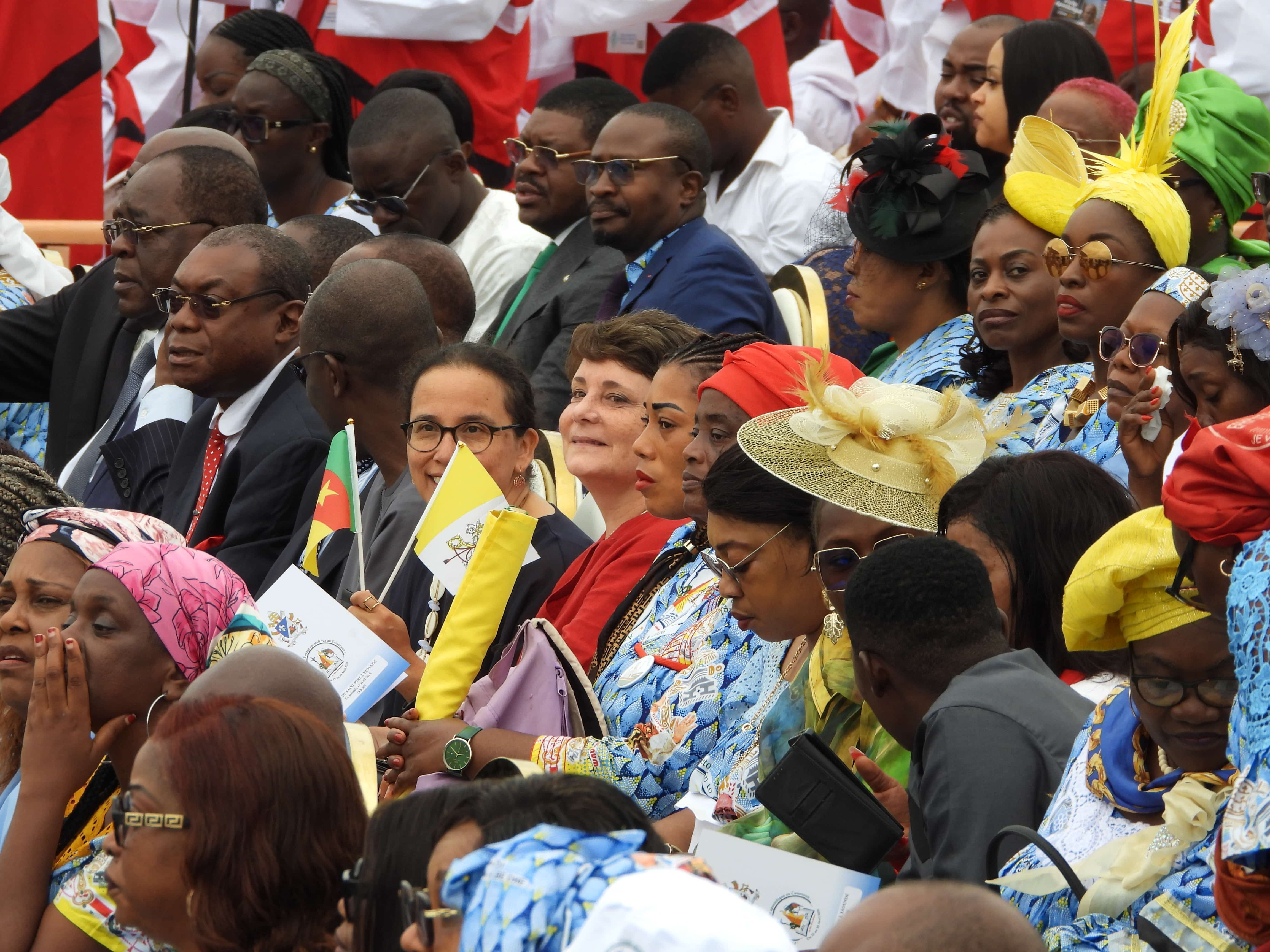
When Pope Leo XIV arrived in Cameroon on Wednesday 15 April, I was fortunate to be at the Government Palace. It reminded me of Pope Benedict XVI’s visit in 2009. I was with several friends (Alicia, Paula and Juliett), and Paula, who was carrying her professional camera, looked like a reporter; I was her assistant, which allowed us to be in a press area.
I was getting WhatsApp updates from those at home all the while: “He just landed, now he’s going down along such-and-such avenue...” and our excitement grew minute by minute. Sirens, singing, flags. The Pope’s car arrived at the Palace. I positioned myself near the carpet where he would go up the stairs and I almost managed to tell him I was from Chiclayo, but he turned his attention to someone else. I was able to tell his secretary, Father Edgar, calmly, who seemed surprised, and thanked me.
A greeting at the Nunciature
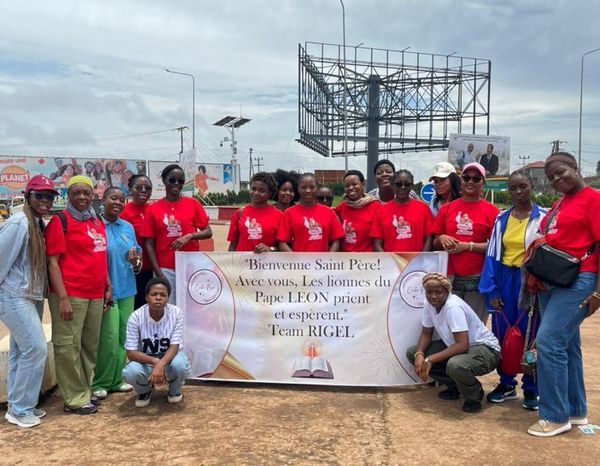
We knew that after visiting an orphanage and meeting with the bishops, the Pope would arrive at the Nunciature, so Paula and I headed there to wait for him. There was a group of people who had had the same idea, and we welcomed him with songs. This time the Holy Father had the car window down and, as he went by, I was able to tell him I was from Chiclayo whilst he gave us his blessing. Greeting the Pope is greeting the vicar of Christ on earth, as Saint Catherine of Siena liked to call him.

A personal connection
Only a year has one by since Leo XIV’s election, and he’s already come to visit us. Although I didn’t get to know him during his period as bishop in Chiclayo, because I was living in Cameroon, I knew we had an American bishop who had great affection for my city. In fact, in the midst of the pandemic he administered the sacrament of confirmation to my niece. She looked for the photo after his election, and although they were both wearing masks, we know it’s him.
I identify with him because I also left Chiclayo and my country to share the love of God with other people.
I feel great gratitude for his pastoral work not only in Chiclayo, but also for the other places where he worked in Peru: Chulucanas, Piura, Trujillo and Callao. I identify with him because I also left Chiclayo and my country to share the love of God with other people.
A serene Pope in a country that hopes for peace
Catholics make up less than 30% of the population in Cameroon, but this time the Archbishop of Yaoundé, Monsignor Jean Mbarga, asked everyone to come out to receive the Pope during his journey, and the response was massive.
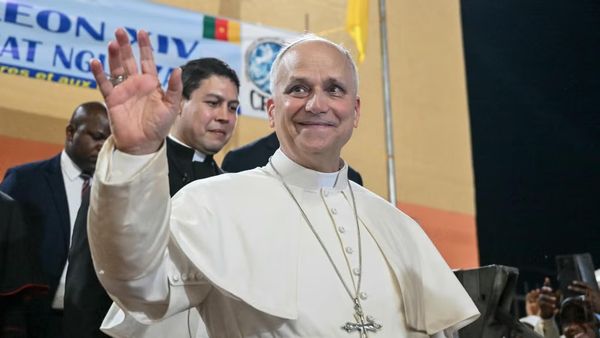
What struck me most about Leo XIV was his serenity in the face of an exhausting programme — at seventy years of age, under intense heat, without missing a single gathering — and how well informed he was about our reality. I resolved to imitate that calm every time I complain about tiredness or the climate. His messages, as well as his compassion, were clear: he reminded us of our value for the Church and encouraged us to act to achieve the change this country has been waiting for so long.
A memory from 8 May: the day Chiclayo entered many hearts
Let’s go back a year. On Thursday 8 May in the afternoon, I was giving a class to some friends when Beatrice said: fumata bianca! In my heart, I was happy to know that the Roman Pontiff had been elected, even without knowing who he was.
I finished the class and we settled in front of the television. We were already praying for him, as Saint Josemaría taught us.
On hearing his name, I quickly recognised Bishop Francis Prevost. Beatrice searched on her phone on Google to see who he was and told me: “He is from Chiclayo.” It was moving to hear his greeting to our diocese.
Friends and companions from everywhere began to call me to congratulate me, among them my mother, who still lives in Chiclayo. Even today, his words on the balcony of Saint Peter’s are an invitation to take our mission as Christians seriously: “Hello to everyone, and especially to those of my diocese of Chiclayo in Peru, a loyal, faithful people accompanying the bishop and helping the bishop.”