
Fashion, friendship, and work done well and done for others: those were the key themes in Encarnita Ortega Pardo's life (1920–1995). Since Saturday, November 7, her remains have rested in the church of San Lorenzo — the patronal church of the city of Valladolid, Spain, where Encarnita spent thirty years of her life — which now also stands open to anyone who wants to come and pray beside her. Her cause for beatification is currently open.
Encarnita was born in Galicia in 1920 and met St. Josemaría when she was twenty. She became one of the first women of Opus Dei, worked with him in Rome, and later, back in Spain, launched formation programs for women. When she died in 1995, many already considered her a saint.
Archbishop Luis Argüello of Valladolid presided over the Mass and burial. The move happened because so many people had asked the cause's postulation to bring Encarnita to a more central church. The archbishop agreed, and secured approval from the Dicastery for the Causes of Saints.
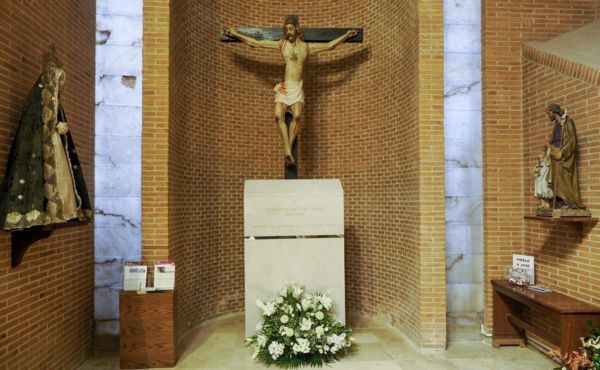
The date wasn't a coincidence. The move took place on the eve of November 9, the day each diocese honors its own saints, blesseds, venerables, and servants of God — or, as Pope Francis liked to call them, the saints "next door" (Gaudete et Exsultate, no. 7): people who live out their faith in ordinary things like work, family, friendship, and caring for others.
"Sinners can become saints"
More than 500 people turned out for the homily at the November 7 Mass, where the archbishop reminded them that "sinners can become saints," explaining that holiness grows out of the grace of baptism and God's mercy. He urged everyone to keep praying and trusting in God, even through hard times.
Speaking about friendship, he said it means taking responsibility for other people, walking with them and holding them up: "To put up with someone is to carry them. It means taking on their life, bearing their illnesses, their problems." That kind of self-giving takes patience and forgiveness, he added, and at its best it can become truly heroic.
Work was the third thread running through his homily. Living out charity in everyday work, the archbishop said, "sanctifies work itself. It helps us grow in holiness through what we do, and it helps sanctify the people around us too." Turning to Encarnita, he noted that holiness is possible even in the world of fashion, and tied her work there to beauty and the dignity of the human body.
He ended by urging the congregation to trust God and stay faithful in small things: "Let's hold on to fidelity in the little things. Let's put our trust in the One who can do anything and who comforts us, and we'll find a sure path toward holiness."
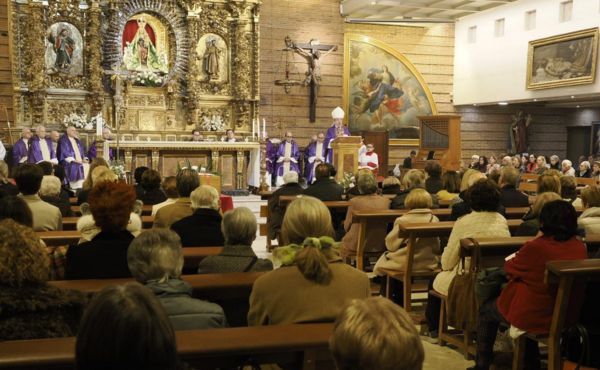
After the ceremony, Fr. Ignacio Barrera, Opus Dei's regional vicar in Spain, thanked the archbishop and asked Encarnita to watch over Pope Leo, Archbishop Argüello, and all the bishops from heaven, and to help everyone reach the one thing that really matters: "getting to heaven."
Thirty years in Valladolid
Encarnita lived in Valladolid for the last thirty years of her life, until she died in 1995. People who knew her remember, above all, how much she valued friendship, and how ready she always was to meet the needs — spiritual and material — of the people around her. Hers was a life that lived out St. Josemaría's words: "There is something holy, something divine, hidden in the most ordinary situations, and it is up to each one of you to discover it" (Conversations, no. 114).
Learn more about Encarnita's life
An open cause
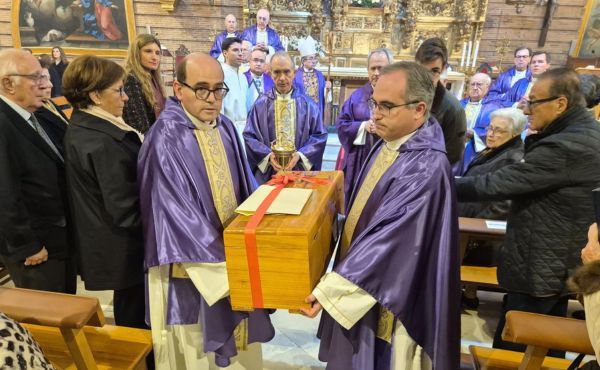
Encarnita's life still stands as a model for Christians today. Her cause for beatification is open, which is why she now carries the title "Servant of God." The diocesan phase took place in the Archdiocese of Valladolid, opening in 2009 and closing in 2012. Investigators gathered testimonies, writings, and biographical records, then sent the full case file to Rome. In 2014 the Holy See confirmed the process had been valid, and work began on the Positio, the document that lays out her life and virtues.
The next step is for the Pope to recognize that she lived the Christian virtues to a heroic degree, at which point she'd be declared venerable. Beatification would then require a miracle attributed to her intercession, and canonization a second one.
Anyone who wants to seek Encarnita's intercession can pray her prayer card, visit her remains at the church of San Lorenzo, and let the Office for the Causes of Saints know about any favors received (ocs.es@opusdei.org).